
Canada Needs an Arctic Strategy

Climate Change, national security, sovereignty, access to food and shelter, and resource extraction: These are serious issues impacting the Arctic at this very moment. To tackle them, Canada needs vision, leadership, and a whole-of-government response.
But, so far, Canada has lagged beyond much of the rest of the world in addressing both major problems and potential opportunities in the Arctic. Why?
Challenges for Canada’s Arctic
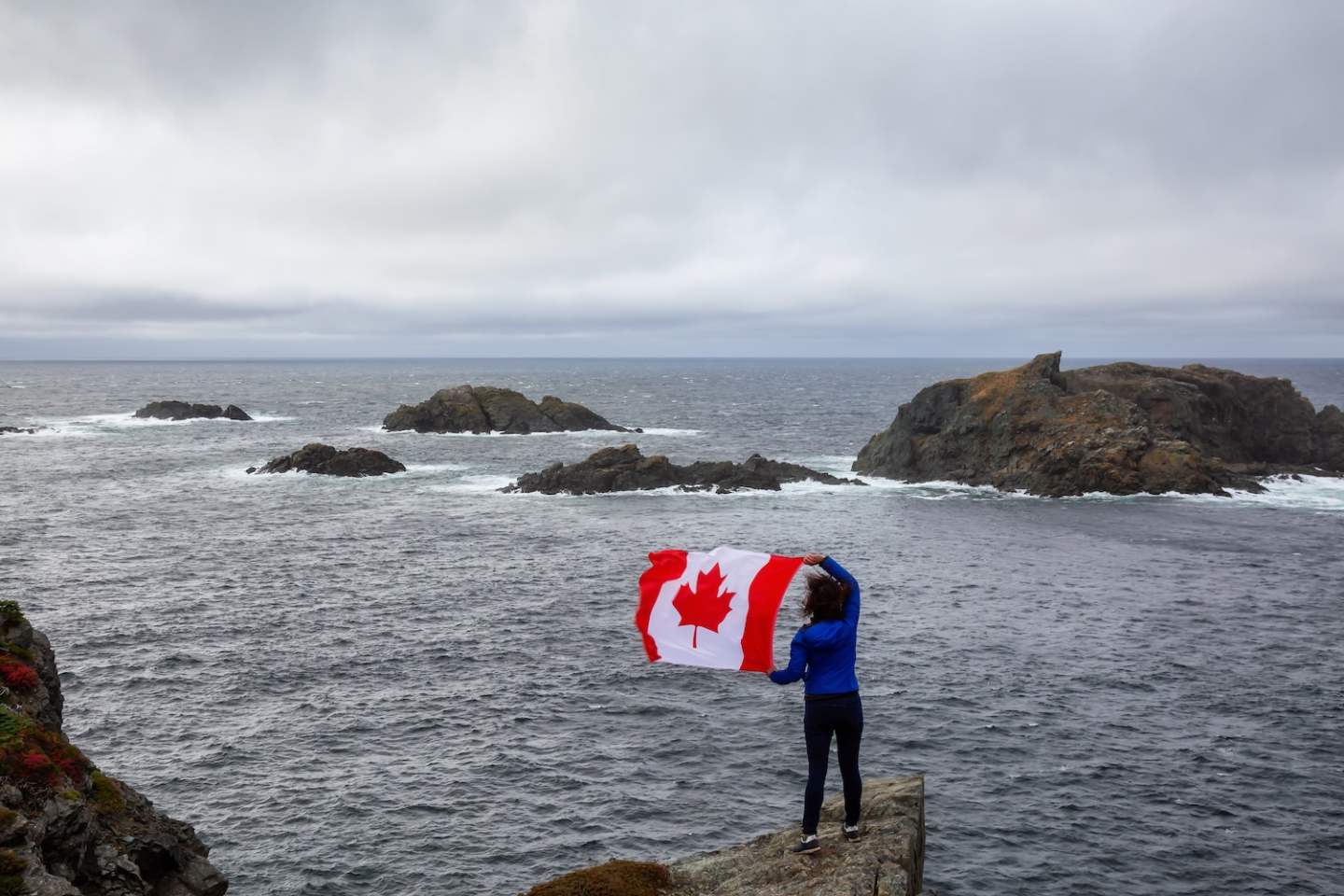
There are several reasons, but there is one root cause tying them all together. Unlike most other Arctic (and several non-Arctic) nations, Canada has no holistic strategy for dealing with Arctic issues.
Let’s back up a second to look at some of the threats such a strategy must address.
Shockingly, the Arctic Ocean may be ice-free in less than a decade. The region is warming at least four times faster than the rest of the world. The North Atlantic Gyre, a circulating ocean current critical to the stability of northern ecosystems, is slowing and could collapse within a few decades.
“Communities in the North are losing up to 90% of their buildings to fire and flood (sometimes both in a single year), and these buildings have even collapsed into the very ground as permafrost erodes.”
We’re seeing these effects with warmer winters and more intense weather in the south. Northerners, on the other hand, are living through devastation. Communities in the North are losing up to 90% of their buildings to fire and flood (sometimes both in a single year), and these buildings have even collapsed into the very ground as permafrost erodes.
But climate change is far from the only issue.
China is increasing holdings in the North and has formally added the Arctic to its “Belt and Road” Initiative, creating a new form of capitalistic colonialism that’s making rapid inroads into Canadian territory. At the same time, the United States denies Canada’s claim to sovereignty over the Northwest Passage.
Even amidst its war against Ukraine, Russian submarines are testing the boundaries of Canada’s waters, and we have no idea what other countries may be up to under the surface. The development of hypersonic missiles means Canada’s early-warning infrastructure now has frightening blind spots. The US is in the midst of a review of these new technologies, while Canada has failed to even start such a review.
How Other Nations Are Tackling Arctic Security
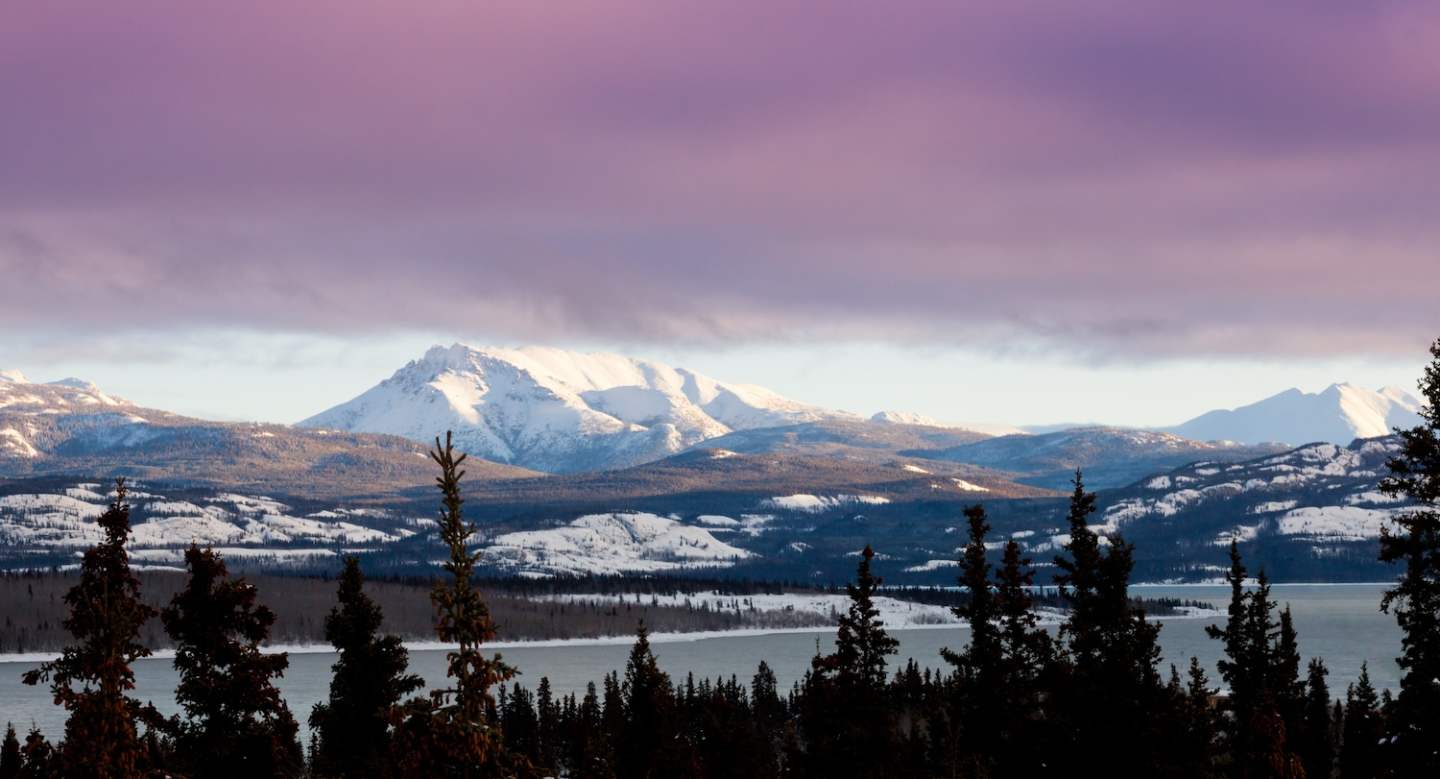
Other nations are taking decisive action to address climate change, economic growth, sovereignty, and security.
“Even the United Kingdom, which has no formal Arctic territory, has developed an Arctic Policy Framework, which is currently being implemented.”
In 2022, the United States federal government adopted the National Strategy for the Arctic Region. This strategy is meant to address major Arctic issues and mandates that the entire government work cross-departmentally to address major issues. But no such strategy exists in Canada, and government departments are far too often working in isolated silos, leading to duplicated effort, wasted time, and wasted tax-payer money.
Even the United Kingdom, which has no formal Arctic territory, has developed an Arctic Policy Framework, which is currently being implemented.
Canada launched a similar framework in 2019 but has failed to develop an implementation plan in the half-decade since its launch.
This is a serious problem, one that is only making the issues listed above worse.
As a nimble non-profit, the Arctic Research Foundation is used to pushing the boundaries and taking action under the direction of and in collaboration with the communities where we work.
Normally, this involves work such as hosting youth-elder camps, deploying solar- and wind-powered labs for vertical farming and atmospheric monitoring, or conducting oceanography, hydrography, or stock assessments from our fleet of research vessels.
However, on realizing the lack of a federal vision for Canada’s Arctic, ARF has stepped into the policy world to develop a draft implementation plan for Canada’s Arctic and Northern Policy Framework.
Canada’s Arctic Strategy
We call it the Arctic National Strategy, and we offer it up to parliamentarians as a foundation upon which to build.
The strategy is built around four pillars:
- Reconciliation and the co-production of knowledge
- Protecting the environment while understanding and adapting to climate change
- Capacity building and economic development
- The need for, and benefits of, research data standards and improving Arctic data management
These four pillars encapsulate a summary of the issues we and our Indigenous and science partners run into every day in our work. They’re built out of high-impact recommendations, common-sense policy changes, and shovel-ready projects that can have a meaningful impact on the biggest issues facing the Arctic.
These recommendations are wide-ranging, from piloting new ways to conduct fish stock assessments to increasing administrative capacity for applying for federal funding in remote communities, to collecting opportunistic hydrographic data in near-shore environments, and investing in green energy-powered containerized agriculture to help alleviate food shortages.
How to Improve Arctic Research
Here is one example based on a recommendation the Strategy makes for Arctic sciences funding:
For most of the 20th century, Arctic research was conducted without much input from communities. Scientists would decide they want to study something—say, the migratory habits of beluga—and would apply for federal funds and then conduct fieldwork. Their results might then be published in an academic journal. However, there was no meaningful consultation, collaboration, or reporting of results back to the community. This was true both in primary research and in terms of how the government allocated spending priorities.
“For most of the 20th century, Arctic research was conducted without much input from communities.”
Much of this has changed for the better. Scientists must now work with communities from the start and their work must be done to the benefit of locals and with their participation (or at least approval). Funding structures have also changed, so communities now have much more say over where government dollars are spent.
However, federal grants are still administered through a system that is based on a Southern way of thinking. They have enormous administrative burdens and grants for Arctic research follow the same procurement rules that a grant to study Lake Winnipeg or the forests of New Brunswick carries.
This means that while communities have access to more funding in theory, in practice it can be very difficult to actually get those funds out the door.
“The Canadian government needs to modify funding and grant application structures to be more equitable for northerners.”
Universities have experienced researchers, dedicated staff, and large departments with expertise in applying for government funds. It is not fair to expect communities, many of which may only have a handful (if any) of full-time, permanent administrative staff, to shoulder the same administrative burden.
The Canadian government needs to modify funding and grant application structures to be more equitable for northerners. At the same time, It must also invest seriously in capacity building to ensure communities have the expertise and trained administrative staff needed to access and administer federal grants.
We must make serious investments in community engagement, science, and infrastructure that will enable a coordinated, local-to-regional approach to establish long-term, community-led, and adaptive monitoring experiments.
We have heard this again and again from our partners in the North, and it is just one of many common-sense recommendations in the Strategy, which was written with input from Northern communities, community leaders, and a group of Northern Senators.
The Future of Canada’s Arctic
There are no simple solutions to the Arctic’s problems, but there is an enormous amount of opportunity, with the right investments and the right policies, to make it a more prosperous, equitable place.
We have laid the groundwork to do so in our strategy, and we urge the federal government to continue building on it in order to implement a holistic vision for Canada’s Arctic future.
-
 Why Canada Needs an Industrial Aerospace Strategy
 Mike Mueller
President and CEO
Aerospace Industries Association of Canada (AIAC)
Mike Mueller
President and CEO
Aerospace Industries Association of Canada (AIAC)
-
 Launching an ESG-Centric Canadian Diplomacy for the 21st Century
 Andrew McLaughlin
VP Legal Affairs, General Counsel and ESG Lead
Major Drilling Group International
Andrew McLaughlin
VP Legal Affairs, General Counsel and ESG Lead
Major Drilling Group International
-
 Wicked Problems, Wicked Solutions: How to Tackle Canada’s Toughest Challenges
 Chad Park
VP, Sustainability & Citizenship
Co-operators
Chad Park
VP, Sustainability & Citizenship
Co-operators
 Tima Bansal
Founder & Lab Leader
Innovation North
Tima Bansal
Founder & Lab Leader
Innovation North
 David Hughes
President & CEO
Generate Canada
David Hughes
President & CEO
Generate Canada