
Assistive Technology: Canada’s Little-Known Opportunity

When we think of emerging industries, we think of biotech, renewable energy, and artificial intelligence. However, there is an underserved economic opportunity that is being missed. These are assistive technologies for people with disabilities.
The Importance of Developing Assistive Technology in Canada

Currently, 1.6 billion people worldwide and over 20% of Canadians have a disability. People with disabilities are a diverse population with diverse needs, from a range of physical or sensory limitations, like hearing and seeing, to mental health, neurodiversity, diabetes, and other health diagnoses.
“Those who were born two decades after World War II will all be 65 by 2030, and they will form a quarter of our population in Canada by 2050.”
The changing demographic – for instance, an aging population – will likely add to the population growth due to age-related disabilities. Those who were born two decades after World War II will all be 65 by 2030, and they will form a quarter of our population in Canada by 2050. At least 20% of the population over the age of 65 will likely have a disability.
Differences in the body and mind are common occurrences that have persisted since human existence. Yet, individuals with disabilities are still continuously excluded from participating fully in society equitably. Our society’s desire for standardization after the invention of mass production during the industrialized age is one of the reasons. Standardization in consumerism gave birth to the idea of what should be normal and created a need to fulfill demand without designing for each person’s needs. The other reason is our society’s appreciation for individualism, prioritizing people who can care for themselves and are productive workers. When people with disabilities did not measure up to the ideal of societal perception, they were rejected or institutionalized.
“People with disabilities are often the last to be considered when products and services are designed.”
These systemic biases present barriers to accessing physical space or the digital economy. People with disabilities are often the last to be considered when products and services are designed. It is difficult for them to navigate the physical spaces we have created or travel on airplanes or public transit.
One form of barrier can create a ripple effect on another aspect of one’s life. Individuals who experience barriers to accessing medical care due to socioeconomic status will experience health challenges that create new disabilities. Lack of health leads to a lack of schooling. Poor education leads to lower income and decreasing economic opportunities. The cycle repeats itself.
Assistive technology has been a key driver of social inclusion. It has also been instrumental in the innovations widely used for those with and without a disability, such as automatic doors, telephone communication, keyboards, flat screens, and speech recognition technology. All these technologies were initially developed to assist people with disabilities and are now mainstream technologies that are very much part of our lives.
Canada’s Opportunity to Serve People With Disabilities
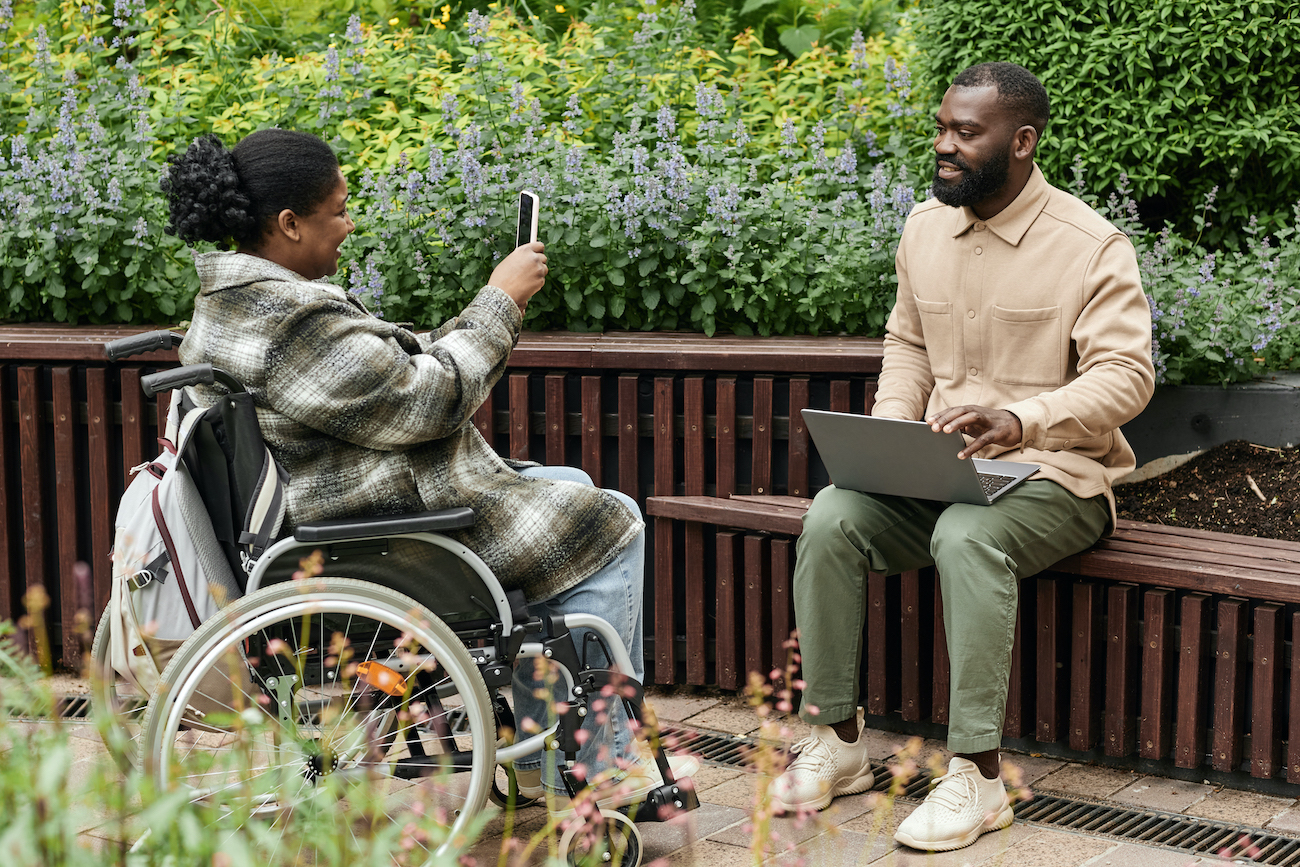
According to the World Health Organization, 2.5 billion people worldwide need at least one assistive technology, which increases from one to two for older adults. Assistive technology can be a powerful economic driver that is not seen in full view. Increasing access and availability can indirectly lower healthcare costs and increase education opportunities and access to employment. If we invest in assistive technologies, we’ll see increased participation and employment to strengthen the Canadian economy and bring more disposable income to people with disabilities who will spend more money in the local economy.
“Increasing access and availability can indirectly lower healthcare costs and increase education opportunities and access to employment.”
Assistive technologies are traditional devices like screen readers for the blind or closed captioning for the deaf and hard of hearing. Now, they can also include navigational smartphone apps for the blind, educational online learning tools for people with learning disabilities, or home automation tools for independent living.
AI and Assistive Technology: Words of Caution
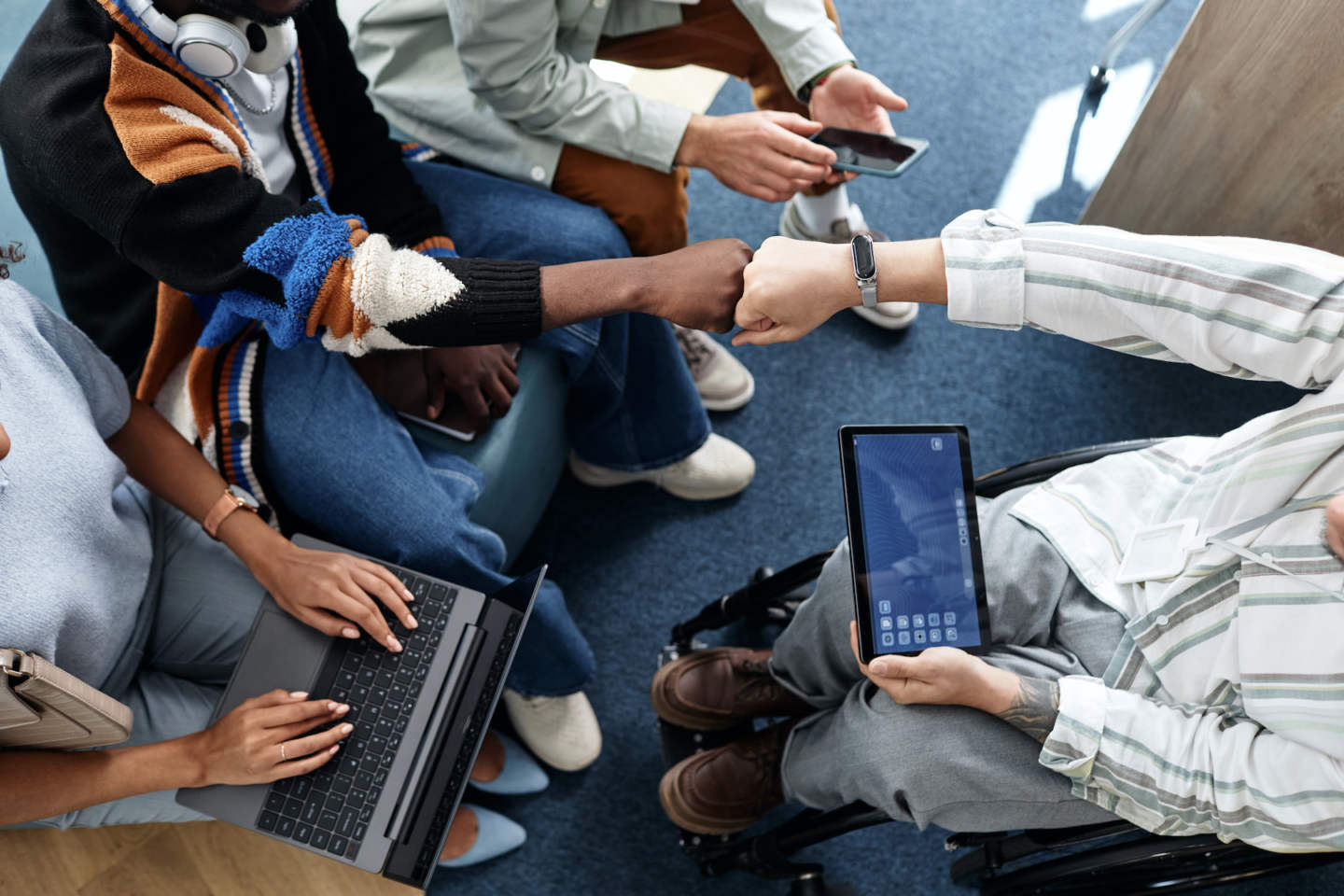
Artificial intelligence is a perfect tool for building innovative assistive technology. Given its apparent ability to mimic human functions and turn cognitive capabilities into digital solutions, AI will open new possibilities. This is what brought me into the assistive technology space. My startup Lisnen helps people with hearing loss recognize sounds calling for their attention. I started the business because of my personal experience with hearing loss.
“AI needs to be designed intentionally to include varying datasets with representation of and co-creation with people with disabilities.”
As our society continues using advanced technology like AI, we must realize the harm AI can bring. AI can create greater exclusion of people with disabilities through the perpetuation of the old standardization mindset of what’s ideal and what’s not. To succeed, AI needs to be designed intentionally to include varying datasets with representation of and co-creation with people with disabilities.
Currently, Canada’s assistive technology space is like the game Twister. One foot is impacted by the public health care system and how well it serves people, another by other industry-specific regulations or disability laws that push for inclusion under pain of lawsuits, and one hand is placed on the buying power of the individual with disabilities or their family to purchase devices on their behalf. The placement of the final hand depends on your age and where you live, as this impacts whether you can receive full or partial public support. In other words, the environment is complex and the technology can be expensive. But one thing we know for sure is that this space is ripe with opportunities.
How to Grow Canada’s Assistive Technology Space
Many major tech companies are seeing the opportunity to target the disability market. They are building assistive preferences into their product. Each new software update now comes with a mention of a new or improved accessibility feature.
What if we use investment opportunities toward disability tech innovation as a pathway to spur economic activity in ways we haven’t seen before?
There are a few things we need to address first.
1. Minimize the Stigma Around Disabilities
We need to minimize the stigma around having a disability. This must be addressed for more individuals to feel comfortable and confident finding support without fearing the repercussions of the social exclusion that comes with disclosing. More awareness and a shift of mindset into a positive narrative of what it means to be a person with a disability will encourage others to realize that there isn’t anything wrong with them.
“We need to minimize the stigma around having a disability. This must be addressed for more individuals to feel comfortable and confident finding support without fearing the repercussions of the social exclusion that comes with disclosing.”
Our society is getting more familiar with and accepting disability and showing signs that it is ready for change. The old mindset that people with disabilities need to fix to meet the standard society places on them is called the “medical model”, and our society is shifting to a new model that says that our environment is what creates a barrier that needs fixing. Gone are the days of standardization. The future is for personalization.
2. Increase Awareness of Alternative Solutions
Another issue that needs to be addressed is that people with disabilities’ first point of contact is with medical institutions, whether it is their doctor, audiologist, optometrist, or other regulated professionals. These individuals are often experts on preventative or reactive care but are less focused on improving the day-to-day lives of people with disabilities when dealing with work, home, or recreational activities. This creates a wall to access knowledge on a variation of assistive technology. People are unaware or don’t think to look for other solutions. They are accustomed to accepting the burden as is. They tend to find out by stumbling onto things and learning from others like them.
3. Encourage Investment in Assistive Technology
Another issue is that investors typically shy away from the disability market, which is driven by the same lack of awareness. The mindset of the disability market being too niche is holding many of them back. Yet, without the data needed to help investors see the economic potential and help minimize any perceived risk of their investment, we wouldn’t be able to seize the opportunities.
Governments are known to be the risk-takers of innovation. From the internet to GPS to the parts used in smartphones, they play a large role in driving change. But when it comes to assistive technology, it is lacking. Canada invested about $28.1 million directly in assistive technology to increase access to the digital economy since 2017.
Another clue to finding out how far Canada is behind in their investment activities around assistive technology is to look at IP activities. According to the World Intellectual Property Organization, countries producing the most patents on assistive technology are China, Japan, and the US, with most of the patent filings being between 1998 and 2021 and most coming from commercial activity.
“Canada bounces between 10th and 13th place overall in the world for the number of filed patents between 1998 and 2021, depending on the type of assistive technology.”
Countries like Japan, already feeling the effect of the demographic shift with a growing old adult population, are investing heavily in assistive technology. It is important to note that Canada bounces between 10th and 13th place overall in the world for the number of filed patents between 1998 and 2021, depending on the type of assistive technology. The low number of results and capital investment for innovation is telling, and we are missing an opportunity to innovate.
If Canada positioned itself as a global leader in the design and distribution of assistive technology, it would bring more economic opportunities for trade export to countries with emerging markets that are implementing new accessibility laws to support growing demand.
4. Commercializing Innovation
Taking innovation into commercialization is another challenge. With a diverse disability market, new business models are needed to provide global reach, personalized solutions, and sustainability. More research and development are needed to develop a new business model that meets the demand for cost-effectiveness, usefulness, and easy distribution channels.
The Future for People With Disabilities
As we move into the future, we can’t repeat old habits and return to excluding people with disabilities when barriers can easily be broken down. People with disabilities can live the same way those without a disability do.
“For Canada to win, we must shift from prioritizing how we maximize our natural resources to thinking of how we can maximize the potential of our people.”
This isn’t charity, nor is this simply a nice thing to do. It’s an opportunity we need to seize. For Canada to win, we must shift from prioritizing how we maximize our natural resources to thinking of how we can maximize the potential of our people.
Overall, we need more awareness and discussion around the potential and benefits of assistive technology and more investment to build better business models, new assistive technologies, and improved user experiences.
There is one thing that is true from all of this. Canada must pay attention to making assistive technology accessible and seizing the investment opportunities in disability tech innovation.
-
 Canada’s Semiconductor Strategy: Are We Mistaking “Not Winning Everywhere” for “Not Competing at All”?
 Glen Lougheed
CEO
Applied Post
Glen Lougheed
CEO
Applied Post
-
 Canada’s Tech Future Depends On What We Do Next
 Kevin d’Entremont
President & CEO
TECHNATION
Kevin d’Entremont
President & CEO
TECHNATION
-
 Digital Trust and Verification in Action: A Catalyst for Economic Prosperity
 Joni Brennan
President
DIACC
Joni Brennan
President
DIACC