
AI General-Purpose Robots are the Future of Canada’s Workforce

Our future depends on a strong workforce. From assembling parts on the factory floor to logistics, healthcare and operations, and maintenance of key energy infrastructure, the economy would not be able to function without workers. However, with an ongoing and rapidly worsening global labour crisis, this is something we can no longer depend on.
The World Needs More Workers
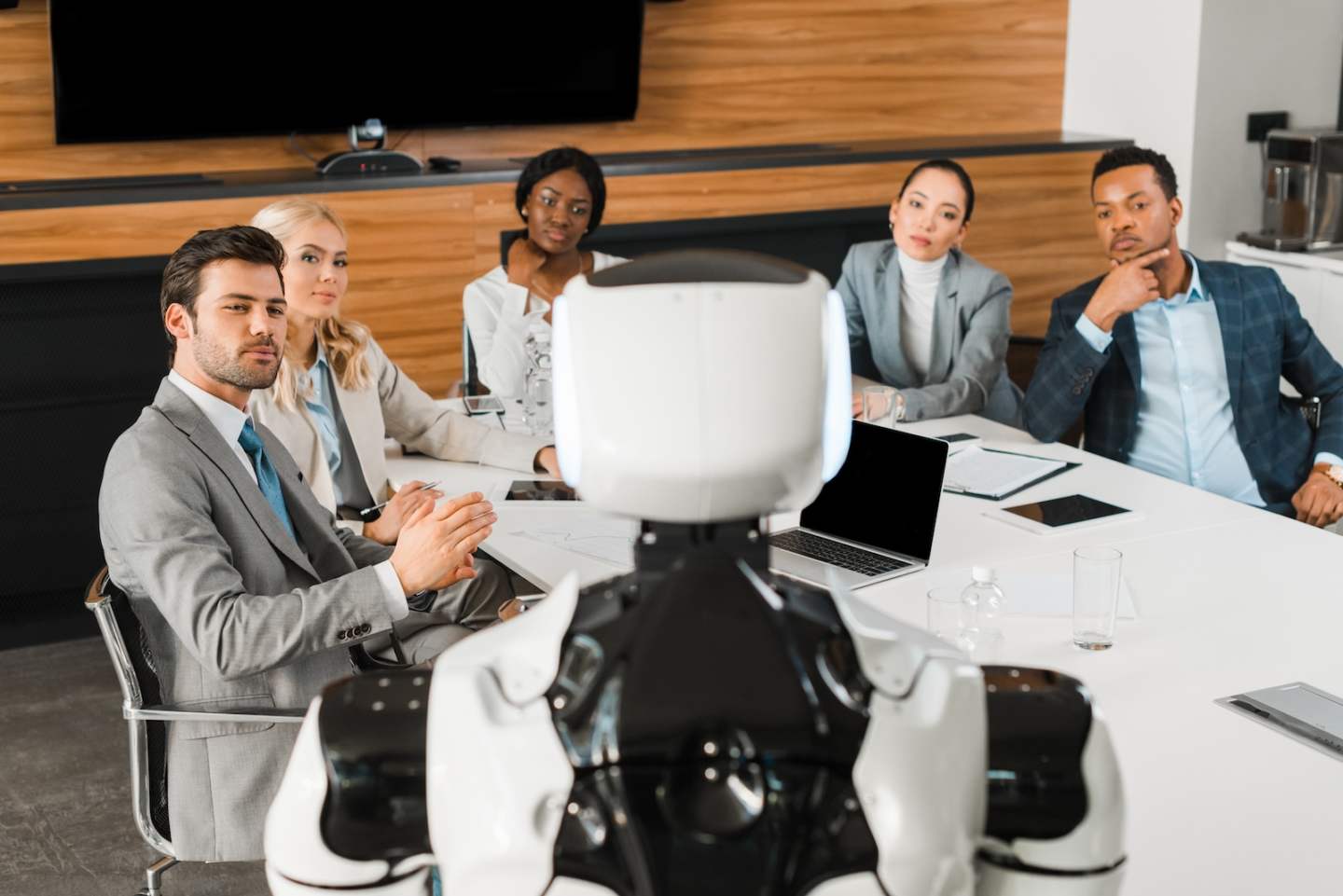
An increasingly aging and shrinking population means that there aren’t enough people for our current way of life to continue flourishing. This will only get worse over time, and Canada is no exception. Canada’s fertility rate is at its lowest in recorded history and has been below replacement for the past fifty years, which is now presenting a clear inhibitor to our future economic prosperity.
Canada already doesn’t have enough people to operate our healthcare system and protect our borders. Take healthcare, for example. A 2018 analysis predicted a shortage of 117,600 nurses in Canada by 2030, while 2020 data showed that a third of registered nurses who provide direct care are fifty or older and nearing retirement. Healthcare isn’t the only industry struggling to recruit. Defence Minister Bill Blair recently said that the Canadian Armed Forces are short up to 16,500 members, and this failure to boost recruitment is leading to a “death spiral.” For the manufacturing industry, the labour shortage has more than doubled in less than a decade – with the percentage of manufacturers reporting understaffing increasing to over 80% in 2022.
“Canada’s fertility rate is at its lowest in recorded history and has been below replacement for the past fifty years, which is now presenting a clear inhibitor to our future economic prosperity.”
Immigration has long been the proverbial hammer to satisfy the supply and demand gap for labour. However, with the rapid advances of AI and Robotics, technology is catching up to provide our economy with robotic labour units that are five to ten times more productive than their human counterparts. And the timing couldn’t be better. Canada’s productivity doesn’t even hit the top ten compared to other countries in the Organisation for Economic Co-operation and Development (OECD). Widespread adoption of this technology could be the remedy.
Specialized Technology Isn’t Enough to Bridge the Gap
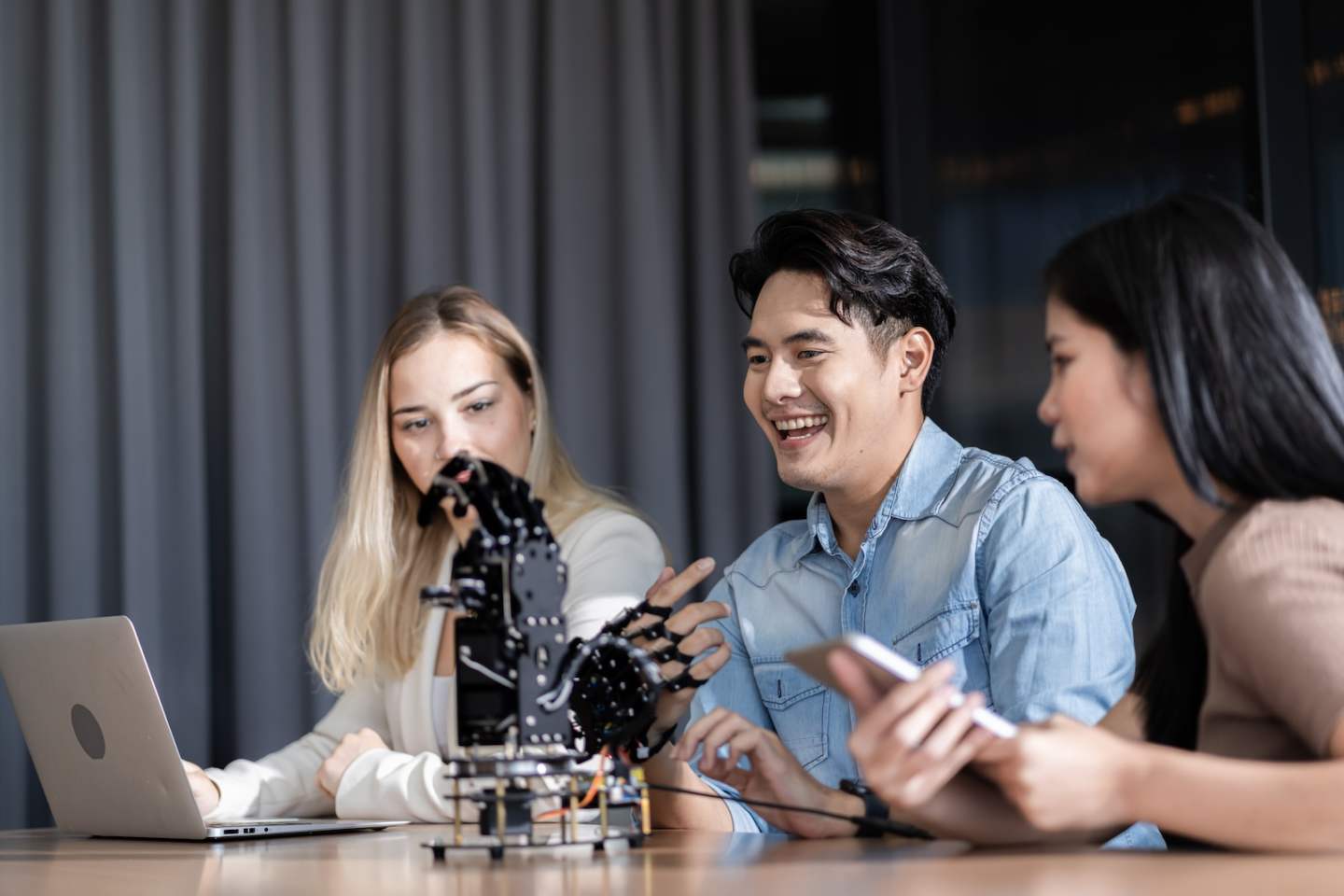
If current technology could provide the level of automation needed to meet this challenge, we wouldn’t be facing labour shortages. A key reason for this is that machines have been limited in the automation of well-defined and specialized work tasks. For example, the majority of automated manufacturing operations feature several different kinds of special-purpose robots, which can carry out tasks like stacking, welding, moving, assembly, or labelling. These robots operate in very precise and specific patterns. However, if there is a change in market demand requiring desired adjustments to that process, it can impose additional costs related to reprogramming the machines, engineering and labour time that can quickly erode the ROI that drove the automation use case in the first place.
As every business leader knows, reality is chaotic and unpredictable, and special-purpose technology can’t successfully navigate it without human supervision.
“AI humanoid robots could be the general-purpose technology that bridges this gap. These robots will be able to do any work a person might be reasonably expected to do.”
Humans are experts at navigating this chaos. The world and the workplace were designed by and for people. For a robot to be truly useful and effective in the workplace, it needs to work in the same way as a person. This means having a brain that can solve challenges and a body to carry out the solutions.
AI humanoid robots could be the general-purpose technology that bridges this gap. These robots will be able to do any work a person might be reasonably expected to do. In other words, if a job exists in the economy, a general-purpose robot should be able to do it.
Closer Than You Think
So, how far away are we from this future?
The last year has seen a dramatic rise in the number of humanoid robot businesses, with a new bot video demonstration seemingly every week. This may look more childlike at the moment – a robot that can move a block, stack a block, pick something up, press a button, and so on – but similar to how toddlers mature into teenagers and then employable adults, we expect to see a similar progression of capability that enables simple, then more difficult tasks to be commercially viable.
Where to Start
Interest in general-purpose humanoid robots is at an all-time high. Our team rarely goes a week without speaking to a Fortune 500 company about this technology and how it will shape the workforce of the future.
“General-purpose humanoid robots should be built to fit into any existing work environment.”
With an explosion of companies in the space, it can be an intimidating area to explore. Sanctuary AI has been working on the challenge of creating human-like intelligence in general-purpose robots since 2018, and our leadership team has been working on this problem for more than a decade across different companies. Here’s what we recommend looking out for:
1. Hands are the key to work:
General-purpose humanoid robots should be built to fit into any existing work environment. This is much easier and more cost-effective than restructuring an entire workplace around different special-purpose tools.
It’s important to think carefully about what is needed to make this a reality. It’s easy to be distracted by marketing videos showing robots walking on two legs, whereas in reality, this is a capability that robots have had for over two decades, and it hasn’t unlocked useful work. More than 98% of all work requires the dexterity of a person’s hand. You can’t create a truly useful humanoid robot without human-like hands, and you should choose a company which understands this.
2. Data will move the needle:
To build a robot capable of doing anything a person can, you need an enormous amount of data from the activities that people would do if they were a robot. Ensure any provider you are considering has a clear roadmap for how to collect high-quality, high-fidelity, human behavioural data.
Gathering this data through teleoperation is what builds the foundational blocks toward embodied artificial general intelligence. This data doesn’t just include what doing a task looks like but how it feels. Tactile sensor technology allows AI control systems to understand the interaction between visual and haptic data. This means that it can understand the difference between picking up something fragile, like a glass, and something more robust of the same appearance, like a plastic cup, and amend its actions accordingly.
3. World-Changing Technology Needs World-Changing Partnerships:
Creating systems that think like and understand us is one of the biggest civilization-level technical problems and opportunities that we will ever face. A technology this significant should not be created in silos. Look for a company with a strong ecosystem of partners and investors to bring this vision into reality.
“The automotive industry is the closest blueprint for enabling a long and effective life cycle for complex machines.”
4. A Manufacturing Strategy That Ensures Robustness Will Ultimately Drive Scalability:
Robot design is important. However, robots need to function 24×7 for five to ten years. The automotive industry is the closest blueprint for enabling a long and effective life cycle for complex machines. Automotive manufacturing already includes a wide array of equipment ranging from assembly robots and welders to injection moulding machines. It’s unsurprising that early adoption has been championed by automotive companies like Tesla or Hyundai via Boston Dynamics.
If you are looking to integrate this technology into your operations, make sure you’re asking questions about manufacturing strategy.
We see the integration of general-purpose humanoid robots into the workforce as a question of when not if. Businesses seeking to understand this technology early will be best placed to reap the rewards and bridge the gap created by global labour shortages.
About the Expert
-

James Wells is the CEO of Sanctuary AI, Canada’s leading company in the development of physical AI that is addressing global labour challenges. An entrepreneur and former venture capitalist, he has spent the last seven years pioneering and shaping the physical AI industry.
See more
-
 Canada’s Insurance Industry Has A Productivity Crisis. AI Can Cure It.
 Jackson Fregeau
CEO & Co-Founder
Quandri
Jackson Fregeau
CEO & Co-Founder
Quandri
-
 Can AI Help Canada Build the Future of Life Sciences?
 Handol Kim
Co-Founder & CEO
Variational AI
Handol Kim
Co-Founder & CEO
Variational AI
 Martin Enault
Chief Entrepreneur in Residence
Centech
Martin Enault
Chief Entrepreneur in Residence
Centech
 David D. Jones
Managing Director
Merck Canada
David D. Jones
Managing Director
Merck Canada
-
 Adoption Is Not Adaptation: The Reskilling Wave Canada’s AI Strategy Leaves Out
 Tracey Taylor-O’Reilly
Founder
Promentus
Tracey Taylor-O’Reilly
Founder
Promentus