
AI and the Electric Grid: Friends or Foes?

The electrical grid is under historic pressure as the energy transition calls for the massive transformation and modernization of the critical infrastructure. Electrification, decarbonization, decentralization, and digitalization represent the megatrends driving the vast transformation of our critical infrastructure, costing many trillions of dollars. To decarbonize, we must electrify. To electrify, we need the grid. The grid is complex, and for that, we need better grid intelligence.
Distributed energy resources (DERs), electrification of transport, electrification of heating, and crypto mining are just a few of the compounding challenges on the grid, causing acute network congestions that restrict the pace of electrification. Aging infrastructure, antiquated workflows, data availability and quality, adverse weather events, and cybersecurity further create real risks for electric utilities. As the grid was planned, designed, built, and operated throughout the past century, effective grid management is necessary to provide safe, reliable, affordable, and clean electricity to all.
The Rise of AI and Its Impact on the Electric Power System
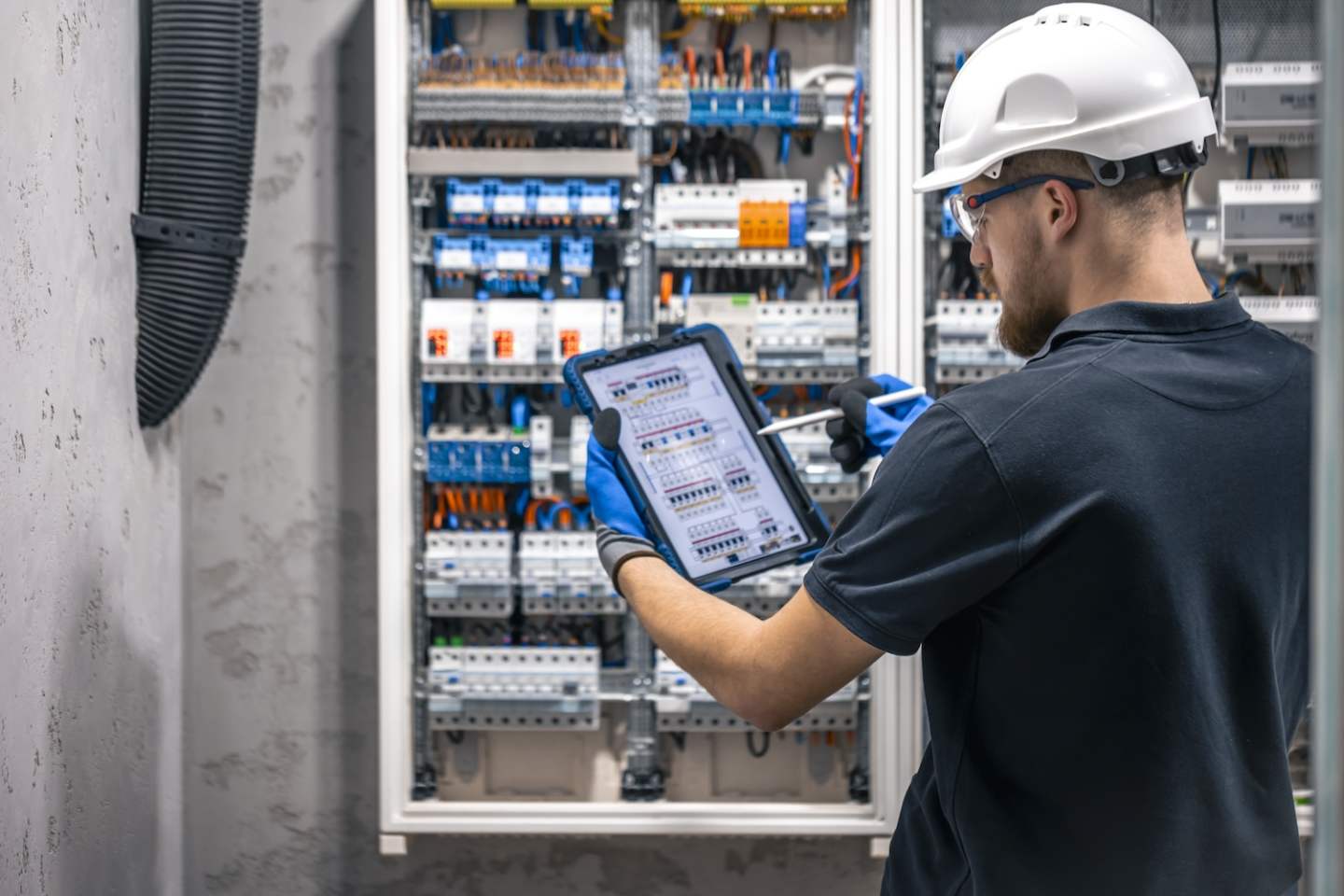
The rise of AI presents an elevated concern for the electric power system. For example, prompts with ChatGPT consume ten times more energy than a Google search, with a daily power usage nearly equal to 180,000 US households. Electricity demand from data centers and cryptocurrencies is forecasted to increase tenfold from 2022 to 2026 to over 800 TWh. While it’s generally true that utility load growth predictions have been optimistic over the past decades, it is now undeniable that electrification will drive load growth beyond predictability.
“Prompts with ChatGPT consume ten times more energy than a Google search, with a daily power usage nearly equal to 180,000 US households.”
Imagine we put a pause or cap on the development of AI (and electric vehicles, and electrified heating, and… and…) because of energy shortage or grid capacity constraints. The energy has to come from somewhere and be transported from the point of generation to the point of consumption. This will, in turn, limit the pace of decarbonization, economic growth, and societal progress. We wish we could generate electrons as easily as bits and bytes or transport electrons as simply as clicking “send.” Not so. The electric power system is vastly complex, analog, and governed by the laws of physics. There’s a reason why it has been often referred to as the largest and most complex machine ever built.
Challenges of Decarbonizing the Electrical Grid
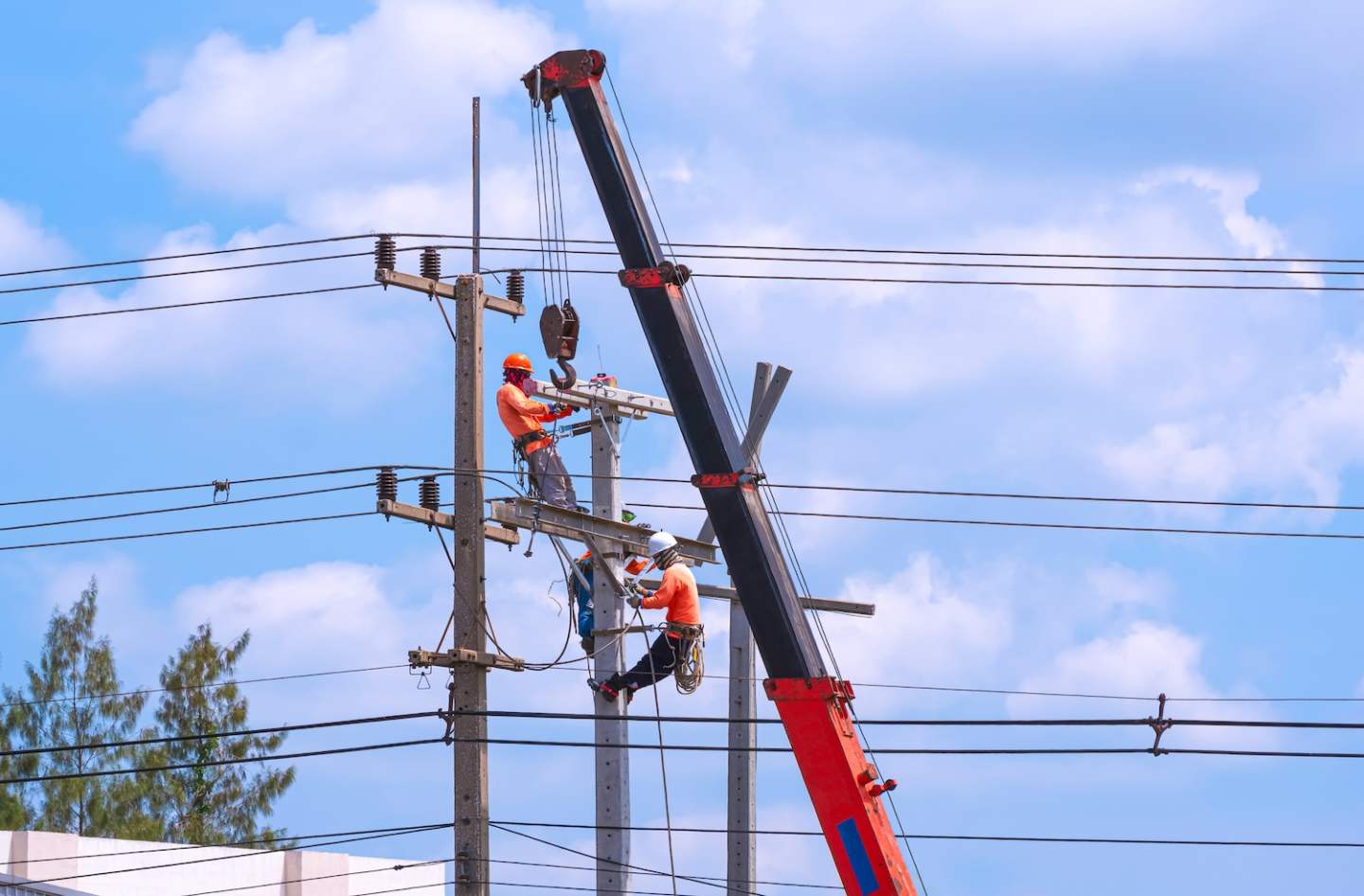
Then there’s the carbon content of the electricity being supplied. While most jurisdictions have clean energy targets, the reality is we’re on an energy transition journey, and much of our electricity is still carbon-emitting. As renewable energy is mostly variable and not as predictable as traditional generation (e.g., gas, coal, nuclear), data centers are often coupled with fossil fuel-based backup. As a result, we have witnessed great setbacks in climate ambitions with the large cloud providers on their sustainability reporting.
“We need a specialized, trustworthy AI to become the killer app for mission-critical electric grids that are rapidly decarbonizing.”
Nonetheless, while AI for the energy system is a double-edged sword, with risks and constraints always comes opportunities. The forces that are challenging energy sustainability are the same that provide the necessary toolsets to solve it. As AI is becoming more pervasive in generating texts, images, and videos, we need a specialized, trustworthy AI to become the killer app for mission-critical electric grids that are rapidly decarbonizing.
Traditional Grid Management vs. AI-Driven Solutions
Traditional grid management is based on conservative long-term studies, capital-intensive overbuilds, and plan-build-set-forget paradigms. Planning decisions are made based on fixed and simplified business rules, standard procedures, and manual worst-case studies that are planned years ahead and reviewed annually by season. Operations are command and control based largely on training and human intuition. As the grid is being threatened by volatility, uncertainty, complexity, and ambiguity (VUCA), this is greatly straining limited resources under increasing time pressures.
Energy AI is increasingly providing the solution to transforming all aspects of the electric utility on its grid modernization pathway. It provides better renewable forecasting, understanding of load behaviours, and management of the critical assets on the grid. Government agencies such as Natural Resources Canada and the US Department of Energy are publishing AI priorities for energy.
“Energy AI is increasingly providing the solution to transforming all aspects of the electric utility on its grid modernization pathway. It provides better renewable forecasting, understanding of load behaviours, and management of the critical assets on the grid.”
This includes companies such as ThinkLabs AI, who are pioneering new and innovative ways to combine the fields of power systems engineering with AI as a specialized copilot for the grid. The grid is highly complex, so a grid copilot needs to be one that understands how electrons flow, how the grid is operated, and how decisions are made. This is where “physics-informed AI” that understands the mathematics and engineering of the real world comes in. This AI is trained by, works with, works for, and is bounded by the classical fields of engineering and physics to be trustworthy for critical infrastructure operations.
An “AI digital twin” of the grid can be trained to be a surrogate model to essentially mirror and optimize complex power flows. Similar to large language models (LLMs), an AI foundation model can be trained and applied to a variety of use cases to manage variable generation, consumption, and storage distributed across the grid.
At ThinkLabs, we’re addressing five priority areas:
- Dynamic Planning: Large-scale simulations for grid capacity and energy resource planning
- Model Validation: Automated data quality improvement
- Grid Orchestration: Real-time grid operations, including state estimation, congestion management, grid optimization, and DER management
- Digital Assistant: Conversational copilot leveraging the AI digital twin as well as large learning of historical events, operator experience, business rules, and standard work practices
- Edge Intelligence: Fast, resilient, and autonomous controls at the grid edge (i.e., substation, feeder, and community levels)
Impacts of AI on Grid Readiness and Decarbonization
The impacts we can achieve include grid readiness to enable 100% penetration of clean distributed energy resources and electrification of transportation, optimize power flow and reduce losses, automate traditional grid planning and operations, accelerate interconnection queues for clean energy project developments, and capital infrastructure build deferral or avoidance. For data centres, this approach aims to achieve carbon neutrality while managing the energy demands of AI that help address to electric system’s challenges. With AI, we believe we can achieve complete decarbonization and electrification while ensuring grid reliability, resiliency, and affordability.
We believe we’re at a critical time in the energy transition. Consistent with many international environmental studies, we believe the next decade is the tipping point where the battle is fought, and the war must be won. We need a portfolio approach to manage grid transformation, including new power plants, power lines, and DERs. Yet, there’s simply not enough time or resources in the supply chain to build generation plants, transmission and distribution lines, and launch new customer programs over the next decade. We have to lean into better grid intelligence as the primary and immediate solution.
“With AI, we believe we can achieve complete decarbonization and electrification while ensuring grid reliability, resiliency, and affordability.”
The Future of AI in the Energy Sector
From Amara’s Law, we’ve learned that as humans we tend to overestimate the short-term impacts of technology advancements while underestimating their long-term implications. In five years’ time, AI will no longer be a buzzword or an industry hype. Yet AI is certain to shape the energy sector for the next decade, which will determine the next fifty years of energy infrastructure.
About the Expert
-

Josh Wong is the Founder & CEO of ThinkLabs AI, a spin‑out launched in April 2024 from GE Vernova. With over 20 years in clean‑tech, he previously founded Opus One Solutions and served as GE Vernova’s General Manager of Grid Orchestration.
See more
-
 Canada’s Insurance Industry Has A Productivity Crisis. AI Can Cure It.
 Jackson Fregeau
CEO & Co-Founder
Quandri
Jackson Fregeau
CEO & Co-Founder
Quandri
-
 Can AI Help Canada Build the Future of Life Sciences?
 Handol Kim
Co-Founder & CEO
Variational AI
Handol Kim
Co-Founder & CEO
Variational AI
 Martin Enault
Chief Entrepreneur in Residence
Centech
Martin Enault
Chief Entrepreneur in Residence
Centech
 David D. Jones
Managing Director
Merck Canada
David D. Jones
Managing Director
Merck Canada
-
 Adoption Is Not Adaptation: The Reskilling Wave Canada’s AI Strategy Leaves Out
 Tracey Taylor-O’Reilly
Founder
Promentus
Tracey Taylor-O’Reilly
Founder
Promentus