
Securing the Integrity of Homes from Flood and Wildfire Damage: A Critical Role for Mortgage Providers

The increasing frequency and severity of extreme weather events—particularly flooding and wildfires—are reshaping Canada’s residential housing market. As climate change intensifies these risks, homeowners across the country are facing unprecedented threats to their properties, exacerbating financial strain and placing additional pressure on the housing market.
Insurance companies have long been at the forefront of managing risks related to extreme weather, but mortgage lenders have largely stayed on the sidelines. As extreme weather threatens the housing market, homeowners facing costly repairs may struggle to make mortgage payments, leading to higher default rates and financial instability. Lenders, such as banks and credit unions, have a unique opportunity to support homeowners by offering resources and incentives for flood and wildfire mitigation.
“It’s time for lenders to move beyond simply assessing financial stability and actively supporting the resilience of homes against climate-related disasters.”
Lenders can play a crucial role in minimizing damage and safeguarding housing market stability, benefiting homeowners and themselves, as both face potential losses if properties lose value or become uninhabitable. It’s time for lenders to move beyond simply assessing financial stability and actively supporting the resilience of homes against climate-related disasters.
Mortgage Providers Are Well-Positioned to Make a Difference

Mortgage providers must recognize that addressing extreme weather risks is essential for both protecting homeowners and safeguarding their own financial interests. As key players in the housing market, banks and credit unions are deeply involved in assessing the value and condition of homes. They also bear the financial risk if a home is damaged or destroyed by flooding or wildfire. This unique position gives them both the means and the motivation to help homeowners reduce their exposure to climate-related risks.
“Homes in flood-prone areas experienced an average devaluation of 8.2% across Canada. This devaluation affects not only homeowners but also mortgage lenders, as it impacts the loan-to-value ratio, a crucial factor in mortgage approvals and pricing.”
According to the Intact Centre on Climate Adaptation report, “Treading Water: Impact of Catastrophic Flooding on Canada’s Housing Market,” the effects of flooding on the Canadian housing market are striking. One key finding is that homes in flood-prone areas experienced an average devaluation of 8.2% across Canada. This devaluation affects not only homeowners but also mortgage lenders, as it impacts the loan-to-value ratio, a crucial factor in mortgage approvals and pricing.
If the value of a property is compromised by unanticipated flood risks, lenders may approve loans or set mortgage rates based on inaccurate valuations. This can lead to financial instability for both the homeowners and the lending institutions.
To mitigate these risks, mortgage providers must proactively educate homeowners on measures to minimize property vulnerabilities. This approach will help safeguard the stability of the housing market and reduce mortgage providers’ financial exposure to climate-related disasters.
The Rising Cost of Climate-Related Risks

Before turning to the resources mortgage lenders could provide clients with to mitigate climate-related risks, it’s important to first understand the significant costs associated with climate change and extreme weather.
“From 1983 to 2008, annual losses ranged from $400 million to $700 million, but since 2009, there has been a clear upward trend. Losses now average approximately $2.7 billion annually.”
Figure 1 below illustrates Canada’s rising property and casualty losses from weather-related catastrophes. “Catastrophic losses” are events like floods, wildfires, and hailstorms that trigger over $30 million in insured losses. From 1983 to 2008, annual losses ranged from $400 million to $700 million, but since 2009, there has been a clear upward trend. Losses now average approximately $2.7 billion annually. Preliminary 2024 figures (Q3 2024) show a record $7.7 billion in losses, making it the worst year for extreme weather in Canadian history.

As flooding and wildfires intensify, homeowners face rising costs to protect their properties. However, many are often unaware of steps to take to reduce risk due to insufficient guidance from stakeholders like mortgage providers. As climate-related risks escalate, it’s vital for lenders to take a proactive role in helping clients reduce exposure, protecting both homeowners’ financial stability and the broader economy.
Home Flood Risk Protection
The costliest impact of extreme weather in Canada is flooding.
In recent years, the increasing costs of flooding have escalated to the point that 10% of residential homes in Canada (1.5 million homes) are no longer eligible to receive basement flood insurance. This is problematic for homeowners—the average cost of a flooded basement in Canada is approximately $54,000. Without insurance, homeowners would be burdened with the immediate, unplanned expense of covering the costs, especially since basement flooding often involves sewer water.
“In recent years, the increasing costs of flooding have escalated to the point that 10% of residential homes in Canada (1.5 million homes) are no longer eligible to receive basement flood insurance.”
For mortgage providers, the growing risk of uninsurable basement flooding presents a significant financial concern, as homeowners facing costly repairs may struggle to meet mortgage obligations. This could lead to higher default rates and increased financial instability within the housing market.
To help reduce basement flood risk, mortgage providers could share the Intact Centre’s “Three Steps to Cost-Effective Home Flood Protection” infographic (Figure 2) with all customers through various communication channels. These could include mortgage closing packages, client emails in Spring and Fall, the institution’s website, and in-branch screens or signage.

Home Wildfire Risk Protection
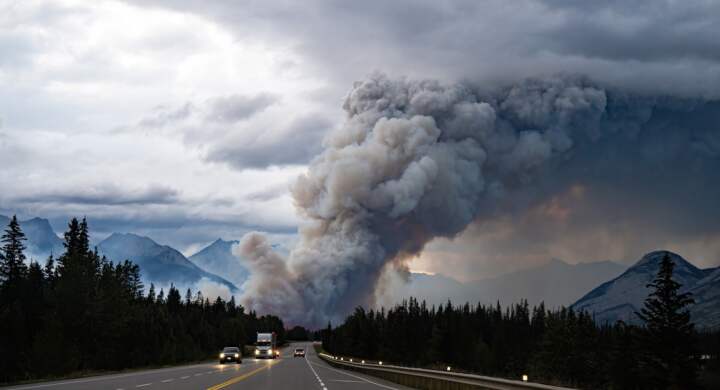
The second most costly impact of climate change affecting Canadian homeowners is wildfire.
“In 2023, wildfires forced 200,000 Canadians from their homes, burning 18.5 million hectares—three times the size of Nova Scotia and eight times the average annual area burned in the past 25 years.”
Mortgage lenders’ efforts to reduce wildfire risks would greatly benefit homeowners, especially since about 60% of Canadian communities are located in the wildland-urban interface (WUI)—where human settlements meet forests and grasslands. These areas are highly vulnerable to wildfire damage. For instance, in 2023, wildfires forced 200,000 Canadians from their homes, burning 18.5 million hectares—three times the size of Nova Scotia and eight times the average annual area burned in the past 25 years.
To help reduce the risk of wildfires in communities throughout Canada, mortgage lenders could disseminate the Intact Centre’s “Three Steps to a Cost-Effective FireSmart Home” infographic (Figure 3) to customers using the various communication methods described under home flood protection (e.g., mortgage packages, client emails, in-branch screens or signage).

Creating Financial Incentives for Risk Mitigation
In addition to offering guidance, mortgage providers can offer financial incentives to help homeowners implement protective measures. For example, lenders could offer reduced interest rates or loan terms to homeowners who install fire-resistant building materials or sump pumps and backwater valves. These incentives would make it more affordable for homeowners to improve safety and increase property value by reducing vulnerability to damage.
“Lenders could offer reduced interest rates or loan terms to homeowners who install fire-resistant building materials or sump pumps and backwater valves.”
Lenders could also incorporate home resilience into the mortgage underwriting process. While most applications focus on income, creditworthiness, and market value, assessing climate risk and resilience would help both homeowners and lenders evaluate a home’s long-term viability. For example, homes with risk reduction measures in place could qualify for lower mortgage rates, further incentivizing preventive actions.
The Canada Mortgage and Housing Corporation (CMHC) already collaborates with mortgage lenders to support energy-efficient upgrades through programs that help finance homeowner improvements. Expanding these initiatives to include climate resilience measures would reduce vulnerability to extreme weather events. By making such upgrades more affordable, CMHC and lenders could jointly protect Canada’s housing market from rising climate-related disaster costs.
Time to Step Up and Protect Canadian Homes
The growing threat of flooding and wildfires cannot be ignored. Mortgage lenders are uniquely positioned to help homeowners protect their properties from these risks. By offering guidance and financial incentives, lenders can help mitigate the rising costs of extreme weather events. In doing so, they will protect their investments and help secure the long-term stability of Canada’s housing market. The time for action is now, and mortgage providers must step up to protect Canadian homes from the growing threat of climate change.
Calls to Action
On Educating Homeowners About Climate Risks
- Mortgage providers should proactively share resources, such as the Intact Centre’s flood and wildfire protection infographics, through mortgage closing packages, emails, websites, and in-branch displays.
On Encouraging Flood Risk Mitigation
- Lenders should inform homeowners about cost-effective flood protection measures, such as installing sump pumps and backwater valves, to reduce the risk of uninsurable basement flooding.
On Supporting Wildfire Risk Reduction
- Mortgage providers should promote FireSmart Canada’s best practices, helping homeowners in wildfire-prone areas take preventive measures to protect their properties.
On Offering Financial Incentives for Climate Resilience
- Lenders should offer reduced mortgage rates or financial incentives to homeowners who implement flood or wildfire mitigation measures.
On Safeguarding Lenders’ and Homeowners’ Financial Stability
- Mortgage providers should integrate climate risk assessments into loan approvals and underwriting processes to account for potential property devaluation.
-
 Climate-Driven Financial Vulnerability is a Vicious Cycle. How Do We Reverse It?
 Chad Park
VP, Sustainability & Citizenship
Co-operators
Chad Park
VP, Sustainability & Citizenship
Co-operators
 Eloise Duncan
Founder and CEO
Financial Resilience Institute
Eloise Duncan
Founder and CEO
Financial Resilience Institute
 David Hughes
President & CEO
Generate Canada
David Hughes
President & CEO
Generate Canada
-
 What is the Future of Food System Sustainability in Canada?
 John Jamieson
President and CEO
The Canadian Centre for Food Integrity
John Jamieson
President and CEO
The Canadian Centre for Food Integrity
-
 Corporate Net Zero Targets Must Drive Action Now
 Robert Klassen
Magna International Inc. Chair in Business Administration
Ivey Business School
Robert Klassen
Magna International Inc. Chair in Business Administration
Ivey Business School
 Matthew Lynch
Associate Director of the Centre for Building Sustainable Value
Ivey Business School
Matthew Lynch
Associate Director of the Centre for Building Sustainable Value
Ivey Business School