
Improving Canada’s Prospects for the Commercialization of Life Sciences Research

With a strong history of excellence in life sciences research, Canada ranks among the top countries in the world for discoveries made in our post-secondary institutions. However, we have consistently faced an uphill battle in turning these discoveries into economic opportunities and approved life-saving technologies. Our momentum is increasing, and we are nearing a point where a few final strategic pushes will bring us over the summit and into a downhill sprint.
The COVID-19 pandemic exposed vulnerabilities in our supply chains, emphasizing the need for products and technology that support the health of our growing population. This awakening and its ongoing reverberations prompted decisive action and drew the focus of decision-makers. Investments have been made in significant manufacturing capabilities in our country, from private sector organizations to not-for-profit projects like API’s own Canadian Critical Drug Initiative in Alberta to the NRC’s Biologics Manufacturing Centre in Montreal. Additionally, post-secondary institutions across the country, including recent recipients of the Canada Biomedical Research Fund (CBRF) and Biosciences Research Infrastructure (BRIF) program, have seen substantial support.
“Work that was previously conducted by contract research organizations (CROs) in countries like China is increasingly being reshored in North America and Europe.”
Post-pandemic geopolitics are leading to a global shift beyond manufacturing, significantly impacting research supply chains. Work that was previously conducted by contract research organizations (CROs) in countries like China is increasingly being reshored in North America and Europe. Many innovators are now realizing that the cost advantage of doing work overseas has eroded over the past decade, particularly for work in Canada.
Breakthroughs in the way life sciences products are developed are driving momentum towards natural advantages in Canada across a wide range of academic fields. From advances in computer-based design and modeling to the application of machine learning to various problems, and the emergence of new classes of medications such as GLP-1 inhibitors (think Ozempic) and genetic medicines (think new cancer and RNA innovations).
With these breakthroughs and more providing significant forward momentum, we now stand a better chance than ever to become one of the top life sciences economies in the world. However, it will take a significant amount of strategic effort to ensure we remove some of the final obstacles.
Improving Life Sciences Infrastructure

One of the biggest challenges for nascent biotech companies is the jump from academic lab incubation to needing their own space. For some time, there has been a significant gap in this area, one that Canada desperately needs to overcome. As most life sciences products face a long, arduous, and expensive pathway to market, the majority of the capital raised is best spent de-risking technology through research and development.
Lab and product manufacturing facilities are very expensive to construct – even the cost to equip a leased building for purpose can be dramatic – which is simply not possible in those early days of development. Additionally, there is a lack of incentive for real estate investors to create these spaces. The return on investment of building a warehouse for $200/sq ft and leasing it for $30/sq ft is simply much better than building a lab for $1,500/sq ft and seeking out biotechs who need their funds for R&D and hope for lease rates below as close as possible to that $30/sq ft as well.
“In Canada, startups are forced to spend too long in academic labs out of necessity, which prevents them from building significant in-house capacity in their research teams beyond the academic stages of development, further limiting their prospects for growth. “
In large and mature life sciences economies, there is enough demand from tenants with deeper pockets to improve investability for developers, and life sciences churn also plays a role. Large companies fail, get acquired, or build new labs, leaving their previous investments available at a large discount for startup companies to occupy.
In Canada, startups are forced to spend too long in academic labs out of necessity, which prevents them from building significant in-house capacity in their research teams beyond the academic stages of development, further limiting their prospects for growth.
The Search for Life Sciences Talent
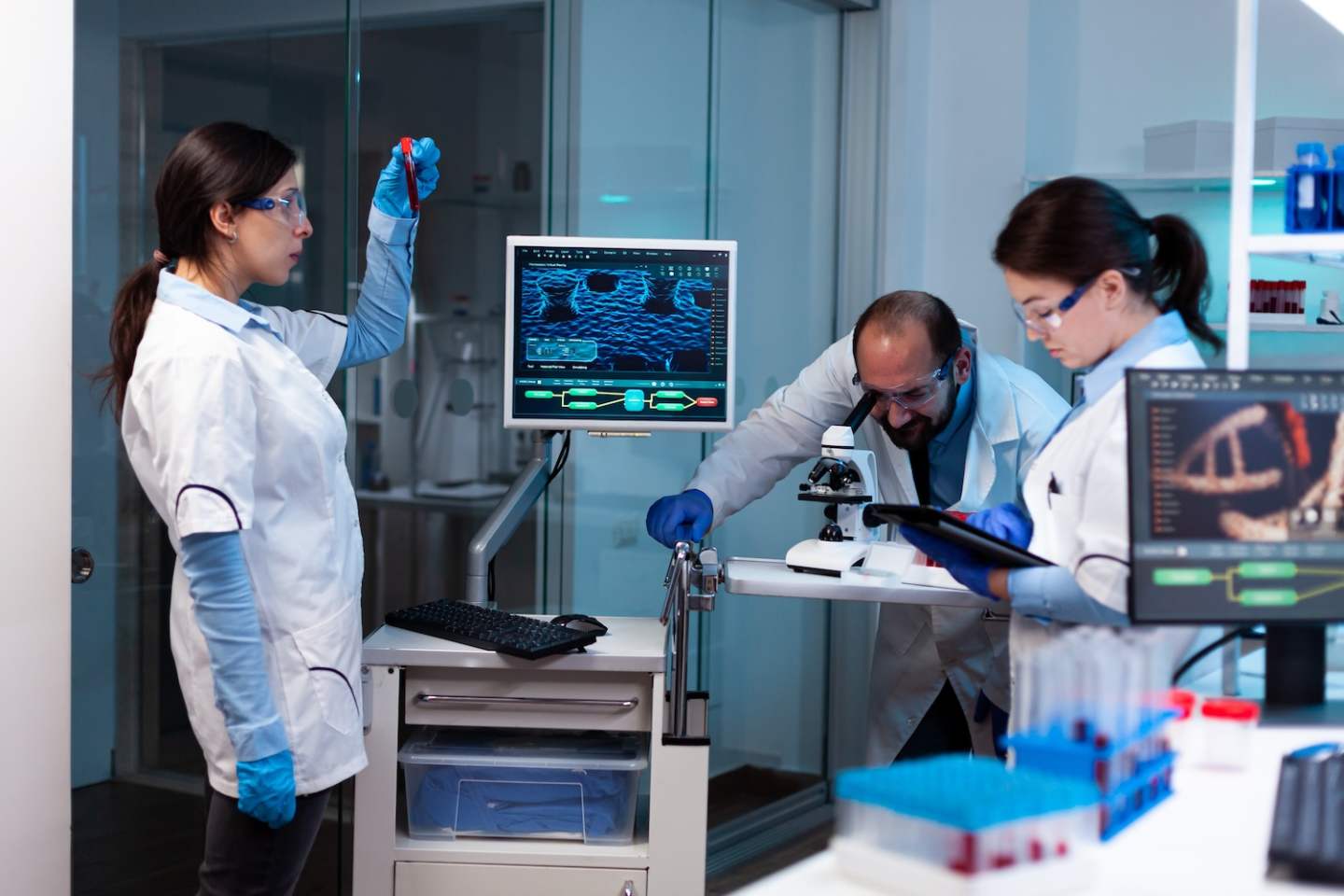
We have phenomenal sources of entry-level life sciences talent in Canada, and significant investments in additional training have been made as a result of the pandemic. This training has targeted niche skill sets and is focused on preparing hires to work in the regulated environments of commercial facilities.
“While companies can and do recruit the occasional seasoned executive, there is tremendous difficulty in recruiting large numbers of mid-level roles that require five to 15 years of experience.”
However, there is a large gap in the next level of talent above this strong pipeline. We suffer from a missing middle. While companies can and do recruit the occasional seasoned executive, there is tremendous difficulty in recruiting large numbers of mid-level roles that require five to 15 years of experience. This is particularly critical, as these roles are generally required to supervise, mentor, and develop entry-level talent.
While startups can benefit from the low-cost labour of newly minted scientists and technical staff who know how to follow standard operating procedures or understand the fundamentals of commercial research, they lack the capability to direct them strategically. While work-integrated learning is critical, we also need staff who have done it before, and when growing a new sector, these experienced individuals are hard to find. This challenge is one of the reasons companies open up a second site in places like San Diego or Boston, where it is much easier to find such roles.
A Scale-Up Mindset, Thinking Beyond IP
Much of the focus on innovation funding in Canada targets stewarding a single discovery from start to finish. This support is crucial, but there is still not enough, as we lag behind other G7 countries. It provides critical backing in the early days to de-risk projects enough to attract initial investors. However, a steeper challenge lies beyond that point if we want to be a leading life sciences economy.
For many life sciences products, expenditure in research and development before hitting an initial validated clinical proof of concept amounts to tens of millions of dollars. With the pressure of racing against a clock on market exclusivity, the most logical course of action once venture capital is raised is to outsource these components.
“Due to competitive costs and preferable expertise, much of this expenditure has historically happened outside of Canada. As a result, Canadian innovation has inadvertently created R&D spending in other jurisdictions rather than within our own.”
The challenge is that, due to competitive costs and preferable expertise, much of this expenditure has historically happened outside of Canada. As a result, Canadian innovation has inadvertently created R&D spending in other jurisdictions rather than within our own. Additionally, without building in-house expertise, acquisitions and deals offered to Canadian companies have been weaker than they should be.
How do we overcome this? By focusing on scale-up capacity and building the components that enable Canadian companies to spend their money in our country. The pandemic has already forced some of this, and we now have significantly more GMP manufacturing capabilities. Coupled with governments shifting demand to keep more IP development within North America and Europe, we have a favourable environment for growth. There’s a wind at our backs.
Now is the time to expand investments like SR&ED, ensuring they focus on companies in the critical scale-up growth stage, regardless of corporate structure – be it publicly traded or privately held. We need to support and attract high risk investments from VCs. We need to seed additional lab capacity and find ways to improve incentives for investors whose dollars currently yield higher returns when building warehouses and offices. Further, we need to support and facilitate programs that enable early-stage companies to recruit more of the seasoned in-house talent they otherwise couldn’t afford. With the right teams, companies become significantly more investable.
We are making some very exciting strides, and if we get these pieces right, we can lead the world in unlocking the potential of the life sciences. Our uphill battle will become a downhill sprint, and we’ll have a self-sustaining sector that cements Canada as the place to develop the treatments of tomorrow.
-
 The Future of Canada’s Economy Will Be Research-Based
 Kevin Smith
President & CEO
University Health Network
Kevin Smith
President & CEO
University Health Network
-
 How Canada Can Increase Research Funding to Improve Competitiveness
 Paul Davidson
President
Universities Canada
Paul Davidson
President
Universities Canada
-
 Canada’s Bioinnovation Pipeline: Growing the Bioeconomy with Early-Stage R&D
 Dr. Lakshmi Krishnan
Vice President, Life Sciences
National Research Council (NRC)
Dr. Lakshmi Krishnan
Vice President, Life Sciences
National Research Council (NRC)