How Canadian Fintech Can Lead the Next Financial Revolution
The more Canada leans into efforts to increase competition and encourage new entrants into the financial sector, which is currently tightly controlled, the better it will be for the consumer and the economy.

Having led businesses on Wall Street and in Silicon Valley—and living in San Francisco—I have a very unique perspective on the topic of banking and fintech in Canada. In fact, one of the primary reasons why I joined Ratehub is because it, and the Canadian banking ecosystem, reminded me of the US in 2010-2012 when the fintech movement began.
At the time, I was hired by Goldman Sachs to help launch a fintech within the bank, marking my transition between the two industries. In many ways, Canada today resembles those formative years in the US, with big bank domination and the emergence of fintech.
Having “seen the movie” in the US, I am able to juxtapose, compare and contrast the two ecosystems, see their trajectories, and identify the opportunities and challenges.
The State of Canadian Banking & Fintech—How Canada Can Lead the Next Financial Revolution
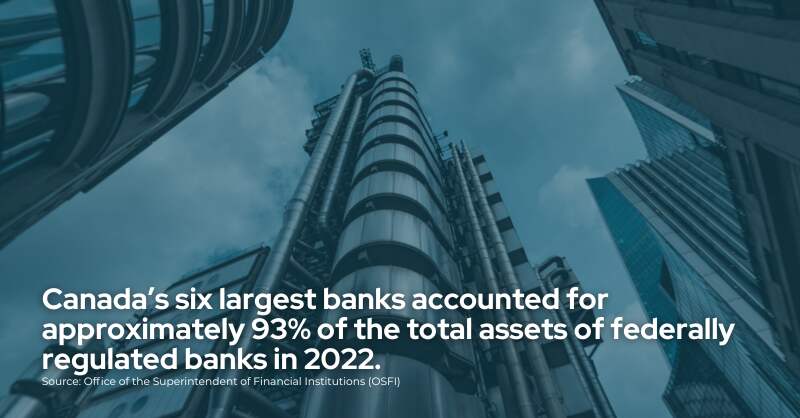
Canada’s financial ecosystem stands at a crossroads. The country’s traditional strength—a concentrated, well-capitalized banking sector led by the “Big Five” banks—continues to underpin its economic stability. At the same time, a growing fintech ecosystem, record investment levels, and sweeping modernization efforts in payments and digital identity have created a unique opportunity: to become a world leader in next-generation financial services.
“The more Canada leans into efforts to increase competition and encourage new entrants into the financial sector, which is currently tightly controlled, the better it will be for the consumer and the economy.”
But this outcome will only be realized if government, regulators, investors, and industry leaders act decisively—and in coordination. I am a big believer in a market economy, and the more Canada leans into efforts to increase competition and encourage new entrants into the financial sector, which is currently tightly controlled, the better it will be for the consumer and the economy.
Where Canada Stands Today

Canada’s banking system is globally recognized for its strength and prudence, but its very stability has led to limited competition and slow innovation. Meanwhile, fintech investment has surged to record highs in recent years, driven by global investor appetite and maturing domestic startups.
Key national initiatives—from the Real-Time Rail (RTR) payments platform to a forthcoming open banking framework and a pan-Canadian digital identity system—are finally moving from planning to implementation.
The Opportunity: Why Canada Can Win
Few countries combine Canada’s mix of financial credibility, technology talent, and institutional stability. The opportunity lies in connecting these strengths: giving fintechs access to modern payment rails, opening data through privacy-first open banking, and creating the policy environment that rewards competition rather than inertia.
If executed well, Canada could emerge as a global hub for trusted, digital-first financial innovation.
What Must Be Done Now
“Federal and provincial governments should introduce co-investment funds and targeted tax incentives to encourage late-stage fintech growth.”
- Deliver Modern Payments Rails and Open Access: Payments Canada and the Bank of Canada must finalize and operationalize the Real-Time Rail (RTR)—Canada’s long-awaited real-time payments infrastructure. This includes establishing fair access rules for non-bank players, ensuring interoperability, and setting clear settlement frameworks.
- Implement Practical Open Banking: Finance Canada must move from consultation to legislation, giving consumers the right to safely share their financial data with trusted third parties. This will drive competition and unlock innovation in lending, budgeting, and financial management.
- Scale Funding and Exit Pathways for Fintechs: Federal and provincial governments should introduce co-investment funds and targeted tax incentives to encourage late-stage fintech growth. Canadian pension funds can play a pivotal role by allocating a portion of their vast capital to domestic fintech scale-ups. Companies like Ratehub are trying to create new value propositions for the Canadian consumer that partner with the banks but also provide innovative solutions leveraging data and technology to disrupt the ecosystem. But they need to be supported and funded through innovative equity and debt solutions so that they can see a path towards scaling and scaling faster.
- Modernize Regulation and Encourage Experimentation: Regulators such as OSFI, FINTRAC, and the Bank of Canada must coordinate to create a single sandbox and clear, time-limited licensing pathways for new models. Predictable regulation reduces uncertainty and fosters responsible innovation.
- Accelerate a National Digital Identity System: The federal government, in partnership with DIACC and provincial authorities, should fast-track a secure, interoperable digital ID framework—the foundation for safe online banking, faster onboarding, and reduced fraud.
- Incentivize Bank–Fintech Collaboration: Canada’s major banks must shift from defending legacy systems to partnering with fintechs on API access, data sharing, and joint product development. Regulators can reinforce this through innovation credits or regulatory relief tied to collaboration. Ratehub has demonstrated how a fintech can build strong collaboration, bridging the gaps between the consumer and the banks, providing digital products and services that are fast, offer a good selection, where the consumers are, provide the best content in the industry and hence deliver a lot of value to both sides of our hub, i.e., the consumer and the banks. Such collaborations have the potential to set an example for the future ecosystem and need to be encouraged, rewarded and highlighted for more to follow.
- Strengthen Talent Pipelines: Universities, provinces, and the federal government must expand fintech education, research, commercialization, and skilled immigration pathways to attract the next generation of technologists, data scientists, and product leaders.
- Managing the Risks: As Canada modernizes, it must also manage key risks—from digital asset volatility to privacy concerns and market concentration. Clear guardrails from OSFI, FINTRAC, and the Privacy Commissioner will be vital to protect consumers without stifling innovation.
Canada’s Moment to Lead
“The next 48 to 60 months will determine whether Canada becomes a global fintech leader—or remains a cautious follower.”
Canada’s strengths are undeniable—world-class banks, trusted institutions, and an increasingly vibrant fintech ecosystem. The missing ingredient is urgency.
With coordinated execution on payments modernization, open banking, digital identity, and fintech funding, Canada can redefine its place in the global financial landscape.
The window of opportunity is open, but it won’t remain so for long. The next 48 to 60 months will determine whether Canada becomes a global fintech leader—or remains a cautious follower.
About the Expert
-

Naga Parvatharajan is CEO of Ratehub, a Canadian fintech and one-stop shop for all consumer financial needs. Naga has 22+ years of leadership experience in banking and fintech, launching and scaling businesses to over $1Bn revenue in private and public markets with unique experience of having taken a fintech public.
See more