
Dependable Flexibility: The Fastest Path to a Resilient Grid
The next phase of the clean energy transition won’t be defined by who can build the biggest assets. It will be defined by who can build the fastest, most dependable ones.

1. The Real Bottleneck: The Crisis of Speed and Trust
Ambition is not the thing constraining the global energy transition—time is the biggest constraint. Electricity demand is exploding faster than we can build the infrastructure to deliver it.
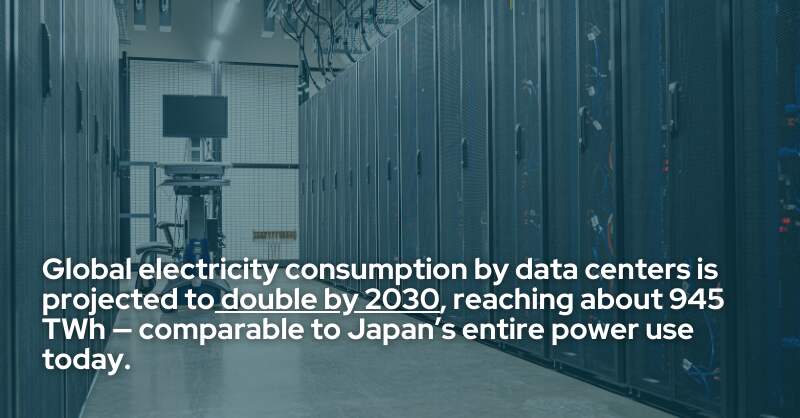
Power grids worldwide face a simple, unsettling problem: we can’t build infrastructure fast enough to meet growing demand. For instance, global electricity consumption by data centers is projected to double by 2030, reaching about 945 TWh — comparable to Japan’s entire power use today. This surge is being driven by AI, electrification, and data-intensive workloads.
At the same time, the timeline to build large-scale infrastructure lags dramatically behind demand growth. Transmission lines and generation projects can take six to fifteen years, or more, from planning to commissioning. Permitting delays and regulatory hurdles only extend that timeline. Meanwhile, new loads—a hyperscale data center, an expansion of electrified manufacturing, or a fleet of electric trucks—can come online in just a couple of years.
“By storing electricity when it’s cheap and discharging during peaks, these systems relieve stress on the grid, eliminate the need for infrastructure build-out to deliver power during peak demand periods, and cut costs for the facility.”
There are two ways to close the supply and demand gap: build more generation or reduce demand during the hours that matter most. Behind-the-meter battery storage at industrial and commercial facilities is helping to close that gap. By storing electricity when it’s cheap and discharging during peaks, these systems relieve stress on the grid, eliminate the need for infrastructure build-out to deliver power during peak demand periods, and cut costs for the facility.
Facilities can deploy behind-the-meter systems like battery energy storage in 12 to 24 months—orders of magnitude faster than traditional grid-scale or front-of-the-meter projects. They’re not just useful; they’re essential if we want to keep pace.
But speed alone is insufficient. The bigger challenge is trust. It’s not enough to simply add new generation or renewables to the grid—we also need systems that can respond in real time to balance them. We don’t just need more capacity; we need capacity that shows up when and where it’s needed. The missing lever in today’s energy transition is dependability. That’s how we turn ambition into execution.
2. The Bridge: Dependable Flexibility
Flexibility is how we adapt to a changing grid. Dependability is how we make that flexibility valuable.
In a grid increasingly powered by renewables, flexibility is non-negotiable. Demand response, variable loads, distributed resources, and energy storage all form the toolkit by which we balance supply and demand. But flexibility without consistency is like a promise without delivery.
Here’s where batteries—especially behind-the-meter—distinguish themselves. They deliver dependable flexibility: automated, repeatable, precise. They don’t wait for human signals or schedule coordination. When enabled by AI and backed by powerful grid forecasting software, they respond the moment they’re needed.
“Dependability happens automatically. Batteries don’t require labour-intensive actions from individuals or teams; they act for us.”
And this isn’t theoretical. Batteries already participate in demand response and other grid programs, providing fast, precise dispatch that scales far more predictably than behavioural demand response programs alone. Conventional generation takes time to ramp up, and manual demand response depends on human coordination. Batteries, by contrast, can dispatch electricity in seconds, delivering dependable flexibility exactly when needed.
When aggregated and managed through intelligent software, fleets of battery storage systems can operate as virtual power plants, supplying the same dependable performance as large-scale generation—but without the long lead times or infrastructure costs.
We can deploy behind-the-meter distributed energy resources in 12 to 18 months. Demand response programs—with proper contracting—can begin almost immediately. According to projections from the International Energy Agency, global demand response capacity needs to reach 500 GW by 2030—nearly ten times what existed a decade ago.
Flexibility is not a stopgap. It is a design principle for tomorrow’s grid. But only if it is dependable.
3. From Centralized Power to Distributed Dependability
“When you deploy hundreds or thousands of DERs that respond on demand, you unlock value for the grid by having them operate as coordinated assets in a decentralized electricity system.”
The energy system is shifting. The old model—a few central plants pushing electrons over long transmission lines—is giving way to a more modular, distributed architecture. That’s not a theoretical future. It’s happening now.
In this evolving grid, behind-the-meter energy storage is a foundational element. Each installation contributes dependable capacity at the point of load. Through software intelligence and aggregation, these distributed energy resources (DERs) aggregate to form a network that rivals what might otherwise require massive, slow-to-build infrastructure. This reduces strain on the transmission system, lowers system costs, and accelerates deployment.
When you deploy hundreds or thousands of DERs that respond on demand, you unlock value for the grid by having them operate as coordinated assets in a decentralized electricity system. Host sites benefit through energy savings and new revenue from grid services. Grids benefit through more rapid access to capacity where most needed and reduce the cost associated with building transmission infrastructure.
Peak Power’s role is to make that dependable flexibility accessible and empower large C&I facilities to profit from the energy transition. We deliver energy storage, controls, and grid access via AI-enabled software and innovative financial models that remove friction from adopting these distributed energy technologies. Our systems don’t just respond—they integrate into the energy ecosystem, delivering performance that utilities and markets can count on.
4. Removing Risk, Unlocking Predictability
“Companies don’t need to make risky bets. They can profit from the energy transition with confidence, knowing their outcomes are measurable and aligned with grid needs.”
Large industrial and commercial customers don’t want complexity. They want certainty. They aim to decarbonize, reduce costs, improve the bottom line, and ensure resiliency—but they shouldn’t have to shoulder development risk or divert capital from their core operations.
Dependability here is dual: technical reliability and financial predictability. A battery that fails to respond is worthless; a contract model that produces surprise billing or variable returns is untrusted. We design both sides to deliver certainty.
With a more dependable structure, adoption can scale. Companies don’t need to make risky bets. They can profit from the energy transition with confidence, knowing their outcomes are measurable and aligned with grid needs.
5. The Next Phase of Grid Resilience
“Behind-the-meter systems unlock speed-to-impact. They bypass many of the obstacles facing traditional infrastructure—long permitting, land acquisition, transmission congestion—enabling localized capacity to be in service within months.”
Grid Resilience is not a distant ideal—it’s a present capability. As weather intensifies, demand surges, and supply shocks tighten, the systems we deploy now must perform not just occasionally, but consistently.
The next phase of the clean energy transition won’t be defined by who can build the biggest assets. It will be defined by who can build the fastest, most dependable ones.
Behind-the-meter systems unlock speed-to-impact. They bypass many of the obstacles facing traditional infrastructure—long permitting, land acquisition, transmission congestion—enabling localized capacity to be in service within months. They reduce peak demand stress on the grid and improve a facility’s bottom line. If we treat flexibility as a feature, not a fallback, we can build a grid that meets today’s challenges.
The grid of the future won’t wait for perfect policy or perfect markets. It will be built by those who can deliver speed and trust.
That’s our task. Let’s rise to it.
About the Expert
-

Farid Madhani is the Chief Financial Officer at Peak Power, a company that enables large commercial and industrial sites to deploy behind-the-meter distributed energy resources through zero-capex, performance-based models, aligning grid value with host value. Farid leads the company’s financial strategy and climate finance initiatives to accelerate the deployment of dependable distributed energy resources.
See more
-
 Canada’s Insurance Industry Has A Productivity Crisis. AI Can Cure It.
 Jackson Fregeau
CEO & Co-Founder
Quandri
Jackson Fregeau
CEO & Co-Founder
Quandri
-
 Can AI Help Canada Build the Future of Life Sciences?
 Handol Kim
Co-Founder & CEO
Variational AI
Handol Kim
Co-Founder & CEO
Variational AI
 Martin Enault
Chief Entrepreneur in Residence
Centech
Martin Enault
Chief Entrepreneur in Residence
Centech
 David D. Jones
Managing Director
Merck Canada
David D. Jones
Managing Director
Merck Canada
-
 5 Priorities to Strengthen Home Care and Digital Care
 Adrian Schauer
Founder & CEO
AlayaCare
Adrian Schauer
Founder & CEO
AlayaCare