
Canada’s Nuclear Turning Point: From Concept to Construction
If Canada can maintain a sense of alignment and purpose, it will not only meet its domestic energy needs but also define a global standard for how nuclear energy can be built responsibly and collaboratively.

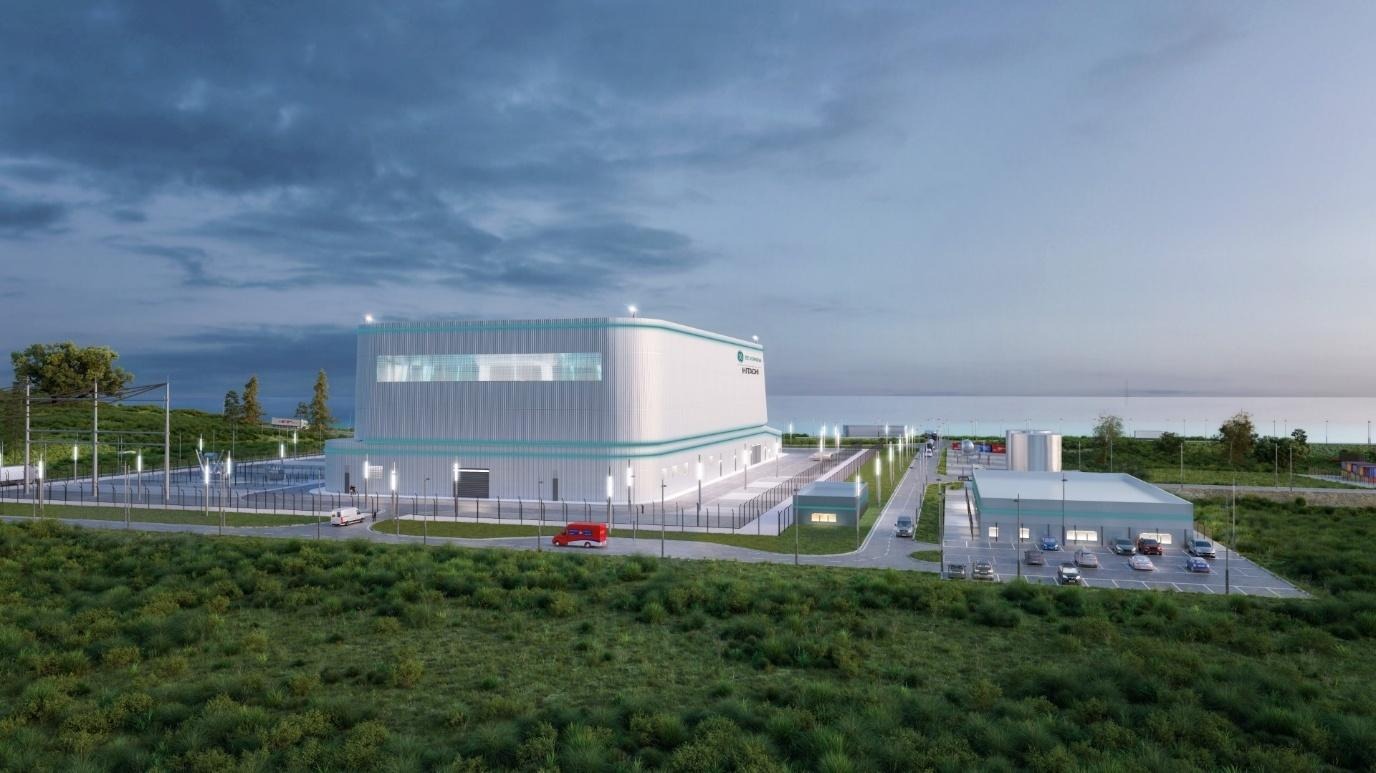
The past few months have been busy for Canada’s nuclear industry.
In September, Prime Minister Mark Carney included the Darlington New Nuclear Project among the first five nation-building projects. A month later, the federal government followed up by announcing that the Canada Growth Fund would be investing $2B to support OPG with the construction and operation of four GE Vernova Hitachi BWRX-300 units. The announcement was made jointly with the Government of Ontario, which is also investing $1B in the project through the Building Ontario Fund.
That same day, almost 2,000 km away, the provinces of Ontario and Nova Scotia signed an agreement to collaborate on the development of SMRs. Not only is this an important signal of new opportunities to come for the Canadian nuclear sector, but it is also an exciting step forward for the maritime province, which just last year passed legislation that ended a long-standing prohibition on Nova Scotia Power owning a nuclear power plant.
Following suit, just days later, New Brunswick signed a three-year support services agreement with Ontario for Point Lepreau.
Western Developments and a National Shift
“Canada’s nuclear opportunity is no longer a question of “if,” but “where,” “when,” and “how many”.”
In the west, Saskatchewan released the Saskatchewan First Energy Security Strategy and Supply Plan, a landmark framework that puts nuclear at the centre of the province’s long-term energy mix.
Across the country, these announcements have signalled that Canada’s nuclear opportunity is no longer a question of “if,” but “where,” “when,” and “how many”.
More importantly, though, these developments represent a move beyond incremental progress. They mark a national shift from debate to delivery, from theoretical roadmaps to active implementation.
At Darlington, the work being done by GE Vernova Hitachi, OPG, Aecon, and AtkinsRéalis to advance the western world’s first commercial, grid-scale SMR has reconfirmed Canada’s global reputation as a nuclear energy leader and innovator.
That success has inspired other provinces to step forward. Alberta is exploring how nuclear—and SMRs in particular—could complement its industrial base and reduce emissions in the oil sands; New Brunswick has signalled its preference to deploy proven SMR technologies to help manage risk and cost; SaskPower meanwhile has identified SMRs as a key component of its future energy mix, selecting GE Vernova Hitachi’s BWRX-300 for potential deployment in the mid-2030s.
Building Stability and Coordination
With so many provinces looking for proven technology and real-world deployment experience, the task at hand now is not deciding what to build, but ensuring we provide the supply chain with stability and coordination, two prerequisites for any industry that aims to deliver at speed and scale. When jurisdictions share knowledge, reuse proven designs, and leverage existing capabilities, they accelerate deployment, reduce costs, and better manage risks. Getting to a repeatable, nth-of-a-kind approach is how efficiency improves.
That kind of consistency creates confidence. Suppliers, engineers, and manufacturers can plan years ahead when they know what technologies are advancing. They can invest in new facilities, train apprentices, and optimize production, knowing that demand won’t vanish with the next policy cycle. This stability also allows colleges and universities to design programs that produce skilled graduates ready to move seamlessly between projects in Ontario, Saskatchewan, Alberta, and New Brunswick.
Stability does not mean stagnation, though. On the contrary, when a technology base is clear, innovation thrives around it and the conditions are created for suppliers to take ownership of their role in the ecosystem. A coordinated approach allows Canada to innovate within a framework that is structured and scalable, rather than experimental and fragmented.
Saskatchewan’s Blueprint and Economic Potential
“In Ontario, the Darlington project is expected to support roughly 18,000 jobs across its lifecycle.”
Saskatchewan’s new Energy Security Strategy and Supply Plan offers a blueprint for how collaboration can work. By building on lessons from other jurisdictions and aligning its approach with proven experience, Saskatchewan is de-risking its path to nuclear power. It is using the regulatory and engineering progress made in Ontario as a foundation, shortening timelines and enhancing investor confidence.
The economic potential of this moment cannot be overstated. The Conference Board of Canada projects that four SMRs in Saskatchewan could generate up to 7,000 jobs annually during construction and operation. In Ontario, the Darlington project is expected to support roughly 18,000 jobs across its lifecycle. These are not just numbers; they represent a domestic industrial base that can serve both Canadian and international markets.
Global Reach and Competitive Advantage
“The federal government can play a unifying role by establishing a pan-Canadian nuclear implementation framework that links funding and incentives to collaboration and consistency.”
As Canada refines its ability to deliver SMRs safely, efficiently, and on time, that consistency is becoming a competitive advantage abroad. When a country proves it can build a technology repeatedly and predictably, others take notice. International peers like Poland, where the BWRX-300 has been selected for deployment, are looking to Canada for support in deploying the same reactor designs, from engineering expertise to supply chain collaboration. As our domestic experience scales, so too does our capacity to export that knowledge, turning Canadian excellence in nuclear delivery into a source of global influence and economic growth.
Realizing that opportunity requires teamwork. The federal government can play a unifying role by establishing a pan-Canadian nuclear implementation framework that links funding and incentives to collaboration and consistency. Provinces can work together to align permitting, training, and procurement. Utilities must continue moving from feasibility to fieldwork, converting plans into physical progress. Industry needs to expand domestic manufacturing, standardize components, and invest in the workforce to align talent with demand, making sure it’s in the right place, at the right time, in the right quantities.
These recent advancements are more than just policy decisions; they are signals that Canada’s nuclear sector is moving from planning to performance.
What matters now is coordination—between provinces, between sectors, and between generations. If Canada can maintain this sense of alignment and purpose, it will not only meet its domestic energy needs but also define a global standard for how nuclear energy can be built responsibly and collaboratively.
The direction is clear—now it’s time to deliver.
About the Expert
-

As Canadian Country Leader for GE Vernova Hitachi Nuclear Energy, Lisa is responsible for the vision and strategy behind the deployment and implementation of the BWRX-300 Small Modular Reactor in Canada. She also leads and oversees business operations across the country, leading collaboration with customers, government, industry, and partners.
See more
-
 Canada’s Water Advantage: A Strategic Economic Strength in a Volatile World
 Lorena Patterson
President & CEO
WaterPower Canada
Lorena Patterson
President & CEO
WaterPower Canada
-
 Fusion’s Decisive Decade and Why Canada Is Positioned to Lead
 Amitava Bhattacharjee
President & Chief Science Officer
Stellarex
Amitava Bhattacharjee
President & Chief Science Officer
Stellarex
-
 Canada’s Economic Future Runs on Electricity
 Vittoria Bellissimo
President & CEO
CanREA
Vittoria Bellissimo
President & CEO
CanREA
 Imran Noorani
Vice President of Policy
CanREA
Imran Noorani
Vice President of Policy
CanREA