
Childhood’s End: Canada’s 21st Century Challenges

In the pandemic’s wake, Canada finds itself in a world changed yet again with forces afoot that threaten its standard of living as well as its security and way of life. After nearly 150 years of operating under the umbrellas of relatively benign global superpowers, Canada needs to prepare for a multipolar world with respect to trade and economic growth opportunities that are linked to its foreign policy and defence capabilities. In many respects, Canada’s long adolescence has come to a rude end, and it must now learn to make its way in the world in a more adult fashion. This awakening, however, comes at a time when its economic indicators suggest economic weakness.
“Canada needs to prepare for a multipolar world with respect to trade and economic growth opportunities that are linked to its foreign policy and defence capabilities.”
Where’s is Canada’s Economy Now?
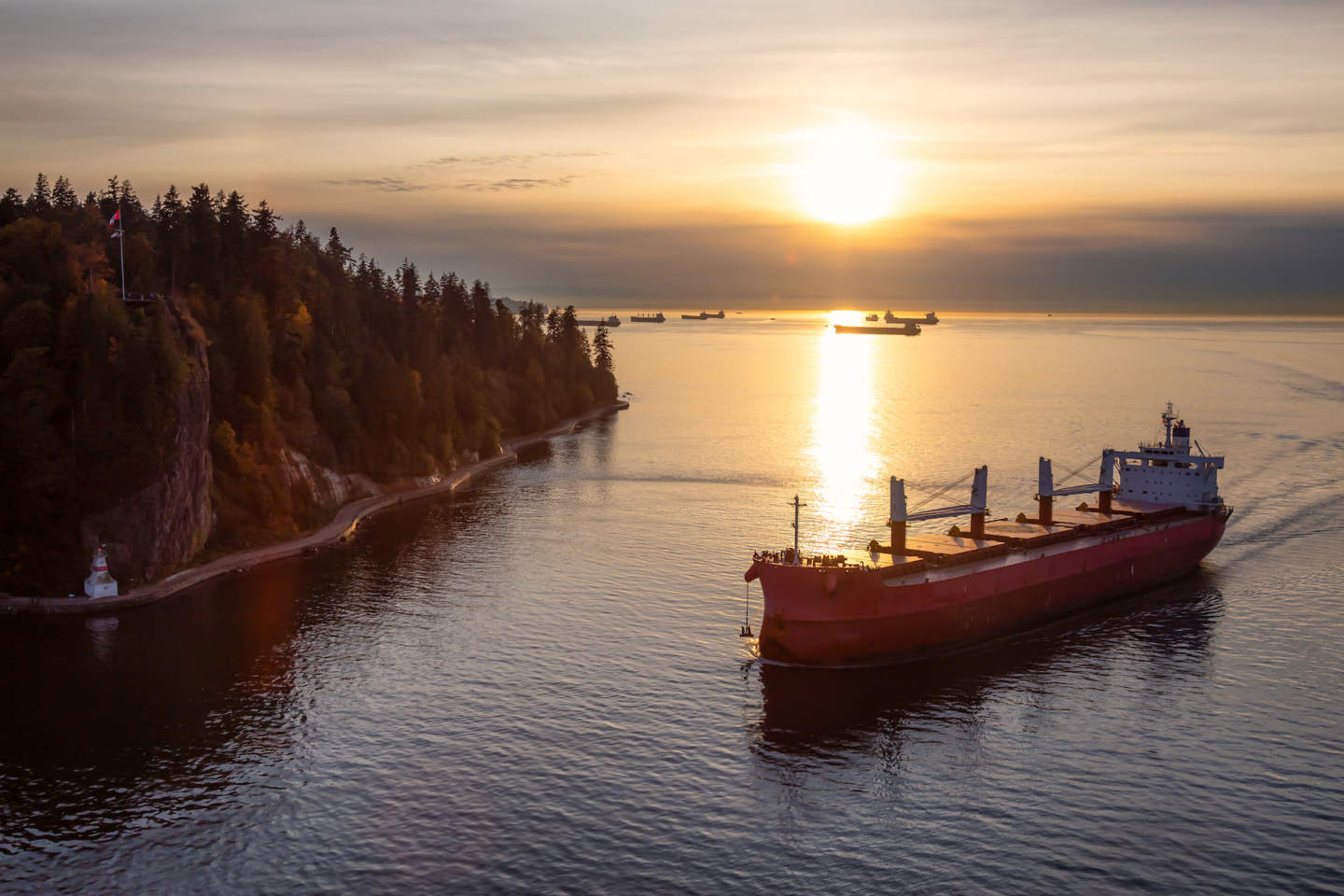
Canada came to be within the fold of the British Empire and then developed and matured within the confines of a US-based world order that benefitted Canada immensely, given our geographic proximity to the US. By the late 19th century, nearly two-thirds of Canada’s resource-based exports were going to Great Britain with the remainder to the rapidly growing United States. Two global wars exhausted Britain and its empire but led to a new 20th-century global environment that saw Canada essentially shift its key economic relationships from Britain to the United States. The era after World War II saw Canada increasingly integrated with the US economy as a destination for both resources and manufactured exports with high points being the 1966 Auto Pact, the 1988 Free Trade Agreement, and the 1994 NAFTA Pact.
Indeed, Canada was quite privileged to share a border and common cultural and linguistic attributes with a relatively benign neighbour that provided us with both a military security umbrella and a densely populated and lucrative market. In the end, this relationship may have been too convenient when it came to forging more diverse foreign policies and trading relationships given that 75% of our exports now go to the United States. As the 21st century debuted, there were hopes that China or India might play a key role in diversifying our export markets. However, any hopes here over time have been revealed as fraught with other perils, as the events of recent years have demonstrated.
“The United States has become more protectionist and self-interested and our relationship with them is actually more fragile than we thought and perhaps not so special after all.”
Since the 1988 Free Trade Agreement, we have seen the fall of the Berlin Wall, the end of the former Soviet Union and the rise of the Asian economies with China and India now becoming leading powers. A smattering of traditional Western powers such as Britain, France, and Germany remain along with potentially rising regional powers such as Brazil. And of course, the United States remains paramount among nations but is increasingly no longer as dominant as it once was either economically or militarily. In the wake of the Trump Presidency, the United States has become more protectionist and self-interested and our relationship with them is actually more fragile than we thought and perhaps not so special after all. Moreover, the free ride on US defence for security has come to an end as the United States expects more of a contribution from all its allies.
When it comes to basic economic performance indicators, our ability to thrive in this changing world is in peril. The real value of our exports of goods and services in 2023 has yet to surpass the peak values reached in 2019. The value of our gross real fixed capital formation has essentially stagnated since a peak reached in 2014. Real per capita GDP has also not grown much since 2019 given the lack of productivity-boosting investments accompanied by faster population growth. Meanwhile, federal government economic policy has enriched assorted transfers at both the individual and intergovernmental levels, fueled by persistent deficits and a large accumulated national debt. Federal fiscal direction has signalled that it emphasizes consumption over productivity-boosting investment when it comes to spending priorities.
What are Canada’s 21st-Century Challenges and Opportunities?

The challenge is a more competitive multipolar world than we have been accustomed to with respect to both trade and economic growth. It is no longer the familiar two-power-bloc world of the mid-twentieth century but a more disordered world with constantly shifting alliances and interests that afford opportunities and dangers for trade and global cooperation. At the same time, there are opportunities for a nimble and small open economy that is as rich and diverse in human capital and natural resources as Canada is. However, to capitalize on our advantages, we must recognize our interests, develop a focus and purpose for our trade and foreign policies, and renew business investment to boost our flagging productivity. We also need to recognize and accept that much of our comparative advantage still resides in natural resource products and leaving them in the ground and still expecting prosperity is akin to childhood wishes for Santa Claus.
“Much of our comparative advantage still resides in natural resource products and leaving them in the ground and still expecting prosperity is akin to childhood wishes for Santa Claus.”
Our foreign policy has become disconnected from Canadian interests which, at minimum, should focus on defence and territorial sovereignty, protection of citizens, and promoting the welfare of Canadian citizens through international relations that foster our economic growth and political security. Instead, we have adopted a value and virtue signalling role that can best be described as an “open mouth” policy. Internationally, Canada increasingly comes across as a schoolyard know-it-all that always has something to say but when pushed comes away with a bloody nose.
We may wish to transmit Canadian values, but our first goal is to protect and maintain those values at home and only secondly use them to comment on a wide range of international issues. We may be a member of the G7 but realistically, despite a population of nearly 40 million people, we punch well below our weight when it comes to defence or security contributions and should not go about making pronouncements as if we were a major military power when we refuse to invest in that capability. There is something to be said for a foreign policy that speaks softly but carries a stick – military or economic – when needed.
What Must Canada Do to Secure Our Future Economy?
Canada is no longer a teenager that can expect the United States, or anyone else for that matter, to fight its battles. With respect to foreign policy, Canada needs to adopt a goal and achievement-oriented rather than value-signalling foreign policy. Where do our key trade and security relationships lie? What parts of the world should our diplomatic efforts be focused on? Which of our natural resources and products are in demand and how can we leverage them to generate economic growth as well as make our point when it comes to foreign policy goals?
“Canada needs to adopt a goal and achievement-oriented rather than value-signalling foreign policy.”
Given that approximately 75% of our trade is still with the United States, it is obvious that this is a key relationship we should not take for granted. But how do we reinvigorate this relationship? The US is booming at the moment, but why are our exports to them not also booming? What can we do to bolster our defence and security capabilities so that we are taken more seriously as a partner not only in NORAD and NATO but by countries that do not necessarily share our values? We may like to lecture the world on human rights and values. However, everyone would take us more seriously if there were more consequences to actions that threatened our national interests, never mind our citizens at home.
Moral suasion from under the safety of the American defence umbrella is not going to cut it in the 21st century when dealing with China, Russia, India, or even the Americans. With climate change, our Arctic will increasingly be a shortcut for world transportation routes by other countries – not to mention a source of natural resources. If we want to continue claiming it as Canadian territory, given other international interests in the region, we will need to have more of a presence there.
“With Canada’s population coming from every part of the world, that diversity needs to be leveraged into diplomatic and economic insights to create new trade relationships.”
Canada needs to focus on trade and economic growth and encouraging business investment to boost our economic productivity so that we can compete in the industries we rely on with the rest of the world. With Canada’s population coming from every part of the world, that diversity needs to be leveraged into diplomatic and economic insights to create new trade relationships. Part of that will also include doing a better job of getting our natural resources to market. And we must do so in a more technologically advanced and innovative manner that builds our human and physical capital.
Canada’s foreign policy should prioritize the negotiation of new trade and economic agreements that provide access to key markets. This requires a more disciplined and circumspect diplomacy. It is not that we should abandon our values, but we can project our values best by first practicing them at home and leading by example. Also, our attitudes and values need to recognize that our views are not always shared elsewhere in the world and therefore our customary generosity and openness must be tempered with the realization that not everyone can be trusted and taken at face value.
“Canada needs to do a better job of investing in the capability of its military to defend its own geographic space in the face of a rapidly changing world.”
Finally, as Adam Smith so wisely wrote in The Wealth of Nations with respect to the role of government: “The first duty of the sovereign, that of protecting the society from the violence and invasion of other independent societies, can be performed only by means of a military force.” Canada needs to do a better job of investing in the capability of its military to defend its own geographic space in the face of a rapidly changing world as well as contribute more substantially to the alliances that are vital to our national security. Only in this manner can we ultimately generate the respect that we seem to crave when it comes to our pronouncements on world affairs. This may not be the world as we would like, but it has become the world that we live in.
-
 2025 Offers a Chance to Restore Economic Sovereignty and Growth in Canada
 Benjamin Bergen
President
Council of Canadian Innovators
Benjamin Bergen
President
Council of Canadian Innovators
-
 Is Publicly Funded Venture Capital Failing to Serve Canadians?
 Peter Elkins
Founder
Project X
Peter Elkins
Founder
Project X
-
 Navigating Uncertainty: A Call to Action for Canada’s Economic Future
 Mairead Lavery
President & CEO
Export Development Canada (EDC)
Mairead Lavery
President & CEO
Export Development Canada (EDC)