
A Strengthened Care Economy is the Future of Gender Equality in Canada
A strengthened care economy isn’t just about compassion—it’s a smart economic strategy that drives gender equality, boosts productivity, and secures Canada’s inclusive future.


Canada stands on the brink of economic upheaval, buffeted by soaring tariffs and mounting global instability. To those who think that further investment in childcare is a luxury we cannot afford in these times, they would be wrong. Getting the care economy right isn’t just compassionate policy—it’s savvy economics and a powerful lever for advancing gender equality.
A robust care economy will be Canada’s best defence, building resilience, boosting productivity, and ensuring our nation’s inclusive future. Most importantly, it enables women—who still shoulder a disproportionate share of caregiving—to fully participate in the labour market, closing long-standing gender gaps in income, leadership, and opportunity.
“Every dollar spent on assuring access to high-quality care pays dividends in terms of job creation, tax revenues, and, importantly, positive long-term social and economic outcomes for children and their mothers.”
Why Better Care is Smart Economics
Study after study has shown that every dollar spent on assuring access to high-quality care pays dividends in terms of job creation, tax revenues, and, importantly, positive long-term social and economic outcomes for children and their mothers.
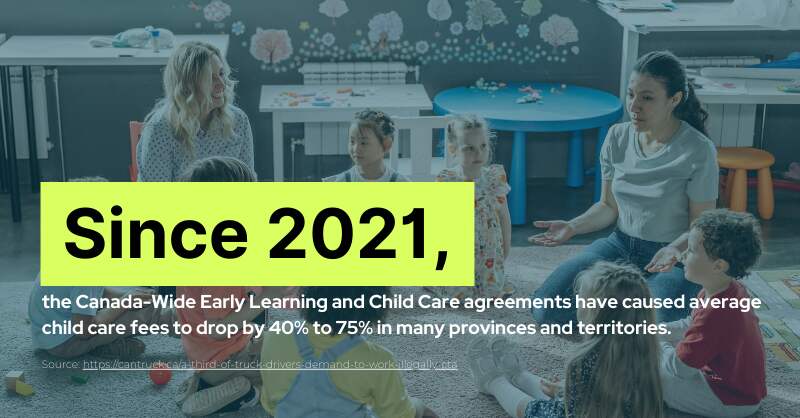
Since 2021, the Canada-Wide Early Learning and Child Care (CWELCC) agreements—nicknamed the $10-a-day plan—have delivered real results. Average child care fees have dropped by 40% to 75% in many provinces and territories. Nunavut, Saskatchewan, Manitoba, Quebec, Prince Edward Island, and Newfoundland and Labrador have reached the $10-a-day target for preschoolers. Manitoba has expanded this to all children aged 0 to 12. Ontario has made progress too, though provincial inconsistency has slowed momentum. Across Canada, close to a million preschoolers are now participating in licensed early learning and care.
But success has brought growing pains. Demand far exceeds supply. As costs drop, more families try to enroll their children—a classic case of induced demand. Today, the barrier is no longer just affordability—it’s availability. And the heart of this challenge is not only bricks and mortar—it’s also people. Without enough qualified early childhood educators, the promise of universal care is out of reach.
The Supply Challenge: Spaces and Educators
That’s why the next phase of this national project must be anchored in economic strategy, as well as social ambition. Research shows child care investments deliver outsized returns. This is a chance to build smarter, fairer—and faster.
“Building more spaces requires skilled labour and infrastructure spending. These are job-creating activities with immediate impact, especially in regions that need both care and employment.”
First, construction. Building more spaces requires skilled labour and infrastructure spending. These are job-creating activities with immediate impact, especially in regions that need both care and employment.
Second, workforce participation. Affordable care unleashes human potential—particularly for women and immigrants—by removing one of the biggest structural barriers to gender equality: unequal access to reliable caregiving. During COVID-19, we saw how fragile the economy becomes when care systems fail. With stable child care, more parents pursue education, training, and employment. This boosts household income, reduces poverty, grows the tax base, and helps children thrive. Study after study confirms: child care isn’t a cost. It’s an engine.
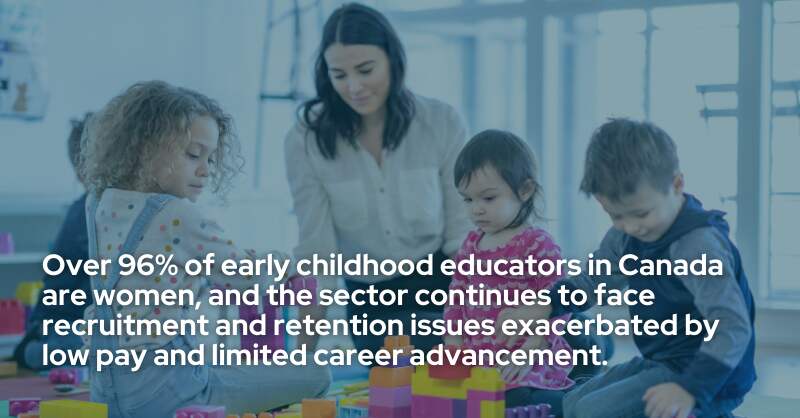
Third, job quality. Early childhood educators are among Canada’s most undervalued workers. Yet their role is essential. We need to treat them like the professionals they are—with better pay, benefits, professional development, and clear career paths. Respect for care work is key to shared prosperity.
With an economic slowdown on the horizon, care infrastructure offers a rare trifecta: shovel-ready jobs, long-term resilience, and moral clarity. It’s a counter-cyclical investment that stabilizes families and communities.
Provincial Differences and Indigenous Leadership
Of course, not every province is moving at the same pace. Quebec, a pioneer in low-fee care, still struggles with staffing shortages. Alberta and BC are expanding access, but still need a laser focus on rural and marginalized communities so they aren’t left behind. Implementation is messy—but that’s no reason to pull back. It’s a reason to stay the course.
“Culturally safe, community-led care improves outcomes for children, supports families, and advances reconciliation.”
And nowhere is bold investment more urgently needed than in Indigenous early learning and child care. Decades of Indigenous leadership and research make it clear: culturally safe, community-led care improves outcomes for children, supports families, and advances reconciliation. But the distinctions-based Indigenous Early Learning and Child Care (IELCC) Agreement remains under-resourced. Equity requires more than promises. It demands real investment.
Just as important is where the money goes. That’s why Canada’s new Early Learning and Child Care Act emphasizes funding public and non-profit programs. Public dollars should prioritize quality, equity, and accountability—not be siphoned off by for-profit operators who answer to shareholders, not families. When funds are diverted to private profits—as Saskatchewan and Nova Scotia have been attempting—there’s less to support children and educators. Research shows non-profit and public providers consistently deliver higher-quality care and better outcomes, making them the clear choice for a publicly funded system.
Public Investment, Public Benefit
Here’s the bottom line: Canada is on the right path, even with bumps along the way. The evidence backs it. The benefits are real. What we need now is staying power—federal leadership, provincial accountability, and a national recognition that the care economy is not just a passion project. It is a cornerstone of gender equality and economic resilience.
A strong Canada is a caring Canada. When we invest in child care, we don’t just build centres and classrooms—we build a future where people of all genders can thrive equally, where care work is valued, and where our economy reflects the full potential of all Canadians.
About the Experts
-

Sarah Kaplan is Distinguished Professor of Gender and the Economy and Founding Director of the Institute for Gender and the Economy (GATE) at the Rotman School of Management, University of Toronto. A strategic management scholar and former Wharton faculty, she blends innovation and social impact. Her research explores gender inequality, stakeholder governance, and inclusive business transformation. She co-authored Creative Destruction and The 360° Corporation, and advised on Canada’s Feminist Economic Recovery Plan.
See more -

Susan Prentice holds the Duff Roblin Professorship of Political Science and is a Professor of Sociology at the University of Manitoba. A historical sociologist, she investigates care, gender, social and family policy—with an emphasis on childcare. Her work connects feminist political economy with public policy and social advocacy, partnering closely with childcare movements and promoting equity in higher education.
See more
-
 Canada’s Growth Strategy Must Support Women-Led Businesses
 Sonia Prashar
President & Founder
spPR Inc
Sonia Prashar
President & Founder
spPR Inc
-
 Mind the Gap: The Motherhood Penalty and the Future of DEI in Canada
 Harmy Mendoza
Executive Director
WomanACT
Harmy Mendoza
Executive Director
WomanACT
-
 AI Advantage: Why Women Entrepreneurs Are Key to Canada’s Tech Leadership
 Sonia Sarrami
Director of AI Innovation
NAAAP Toronto
Sonia Sarrami
Director of AI Innovation
NAAAP Toronto