
Sowing the Seeds of Progress: Agricultural Innovation in Canada

In agriculture, a lot has shifted over the past 100 years or so. For starters, we no longer use horses to clear land and plow fields, as technological advancements have completely changed the game to accommodate our growing world. As a main producer and exporter of several vital products, from wheat to soybeans, Canada is well-positioned to be a global leader in agriculture – if we commit to leaning into innovation.
“As the fifth largest global exporter of agri-food products, Canada has some of the most comprehensive food safety regulations in the world.”
In a global economy, it can be difficult to know exactly where our products come from. This shouldn’t be a guessing game when it comes to the food we eat, and luckily in Canada, food safety begins at the farm. As the fifth largest global exporter of agri-food products, Canada has some of the most comprehensive food safety regulations in the world. Everyone who handles our food is required to follow strict procedures and protocols, including Canadian farmers.
Whether you’re a vegetarian or a meat lover, there are extensive measures in place to ensure your food is safe. In addition to animal traceability and biosecurity measures, there are on-farm safety programs that enhance food safety and facilitate market access. Canadian farmers are dedicated to providing safe, high-quality foods to Canadians. However, this is not without challenges. With rapid global population growth, along with extreme environmental conditions, Canada needs to support our farmers in continuing to innovate to feed our expanding world.
Gene Editing: More Than a Buzzword
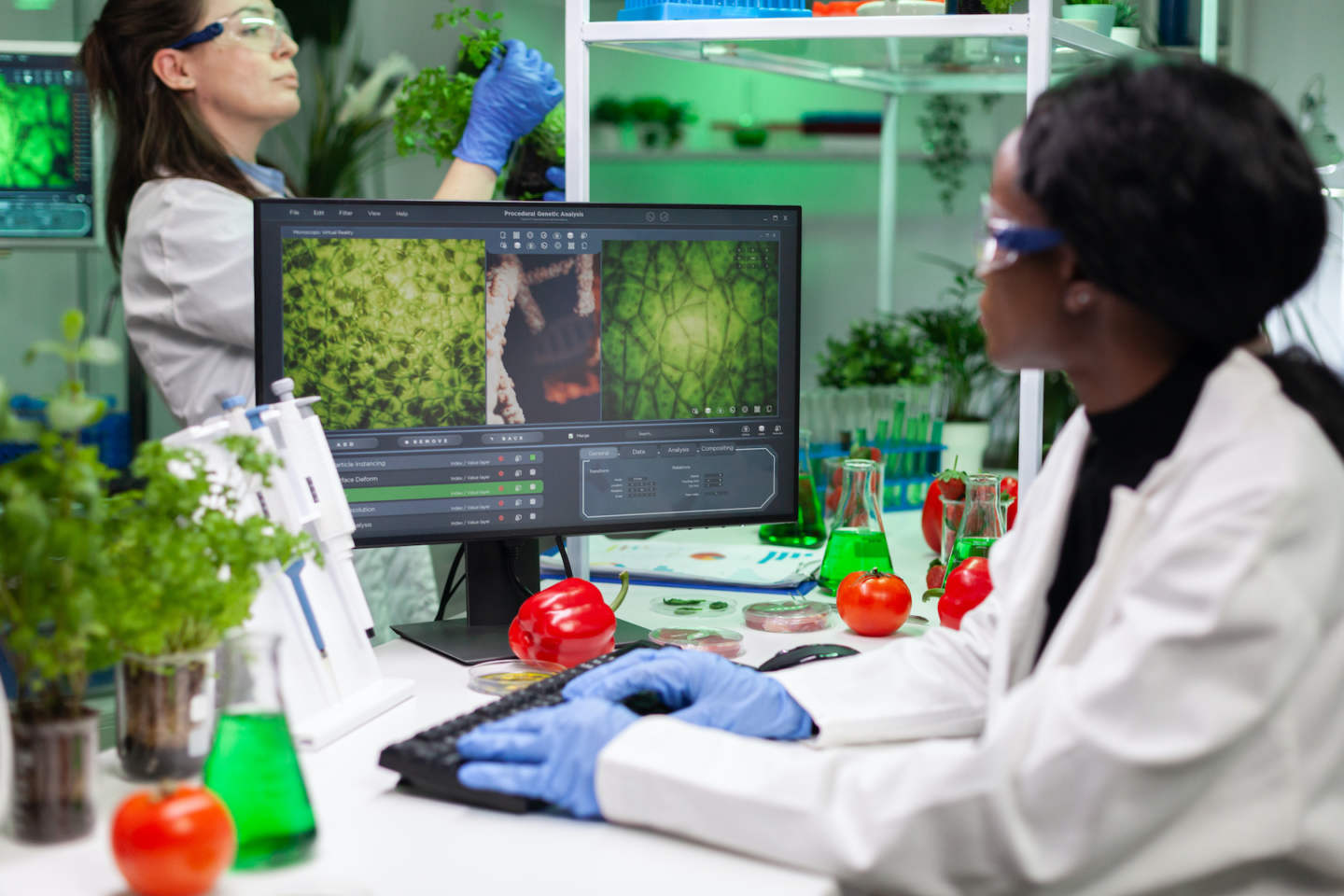
We must take advantage of new techniques to help solve our farmers’ ever-increasing and complex challenges, ensure food security, and preserve our planet’s natural resources. We cannot achieve this without innovation such as genome editing (gene editing). Gene editing provides a tremendous opportunity for agriculture in Canada.
“Gene editing enables us to “fine tune” a plant’s genetic makeup and helps us create progress in a plant’s stress tolerance, disease resistance, yield, and more in efficient, precise, and predictable ways.”
For the past 200 years, our increasing understanding of inheritance and genetics has been applied to crop improvement. Just as people inherit traits like hair and eye colour from their parents, the same is true of plants. Understanding how important agricultural traits (like plant disease resistance and seed yield) are inherited has led to tremendous leaps in this space. Gene editing enables us to “fine tune” a plant’s genetic makeup and helps us create progress in a plant’s stress tolerance, disease resistance, yield, and more in efficient, precise, and predictable ways.
Bayer, along with leading scientists and regulators across Canada and the globe, believes that gene-edited crops are safe to consume, as the processes and products of gene editing have been extensively studied. All new crop varieties, whether gene-edited or conventional, are tested to ensure they meet regulatory standards. Gene editing is something Canadians should be excited about! For instance, at Bayer, we’re exploring the opportunities for using gene editing on seed and microbial products to help alleviate global pressures that put both food security and our planet at risk.
Not only can gene editing help increase yield, but it can also improve resiliency against extreme weather conditions. In 2023 alone, Canada saw record-breaking temperatures and wildfires across the country, which creates an urgent need for crops that survive these conditions so that Canadians can continue putting food on the table.
An example of how Bayer is exploring gene-editing to increase crop yield despite extreme environmental conditions is through short stature corn. This corn is 30% to 40% shorter than traditional corn crops, but their smaller height does not compromise the size and number of leaves. The benefit is that the shorter stalks are stronger and less likely to break or fall over in high winds, meaning less crop loss for Canadian farmers. Not only that, but farmers will be able to grow a higher volume of crops in the same land area they used previously due to the smaller amount of space needed for the shorter corn.
“Having the ability to breed crops to adapt to ever-changing environments and withstand the extreme temperatures we experience here in Canada is crucial to ensuring food stability in the future.”
Many experts warn that the droughts and dryness experienced in 2023 are expected to become the norm. Having the ability to breed crops to adapt to ever-changing environments and withstand the extreme temperatures we experience here in Canada is crucial to ensuring food stability in the future. Canada reached a population of 40 million in 2023, with Statistics Canada reporting that the country’s population grew at a record-setting pace of 2.7% that year. It’s imperative to use every tool in our box, including gene editing, to ensure we can safely and efficiently meet the demands of growing populations.
Canola Opportunities in Canada
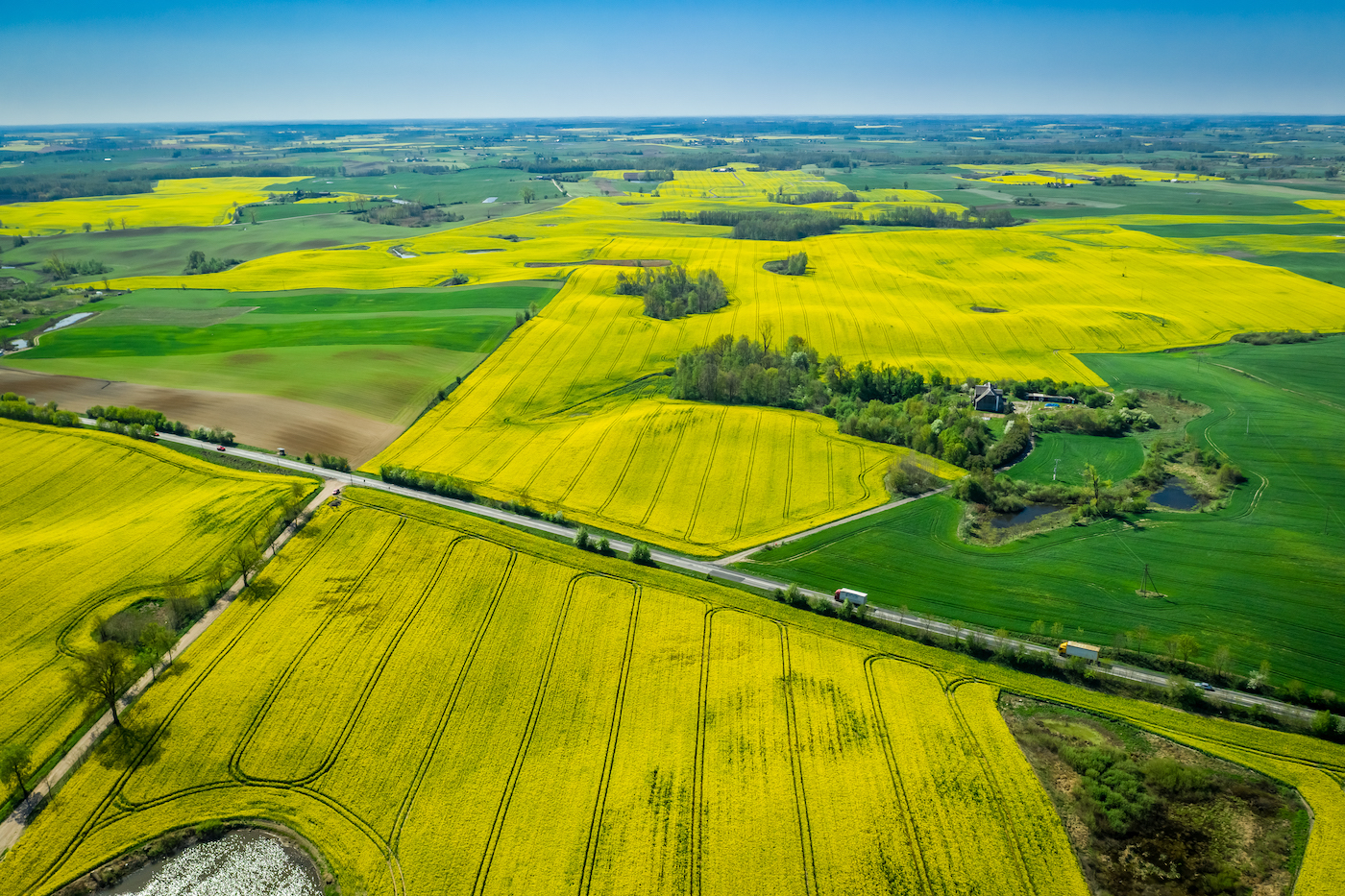
Beyond Canada taking advantage of genome editing, we have an exciting opportunity to leverage a classic crop – canola. Global demand for canola is increasing and is only expected to grow exponentially due to its uses for food and biofuels. Despite the dry conditions of 2023, Canada can expect to see a 50% increase in canola crush before the end of this decade, with several new facilities currently being built to bolster the crop.
“Global demand for canola is increasing and is only expected to grow exponentially due to its uses for food and biofuels.”
Sustainability is a hot topic on everyone’s minds lately, with individuals and organizations working hard to find innovative, greener solutions to tackle our world’s issues. Our canola crops can help Canada achieve its sustainability targets through their use in biofuels. When we see new crush plants opening, we also typically see a refinery built nearby to produce renewable diesel. The Government of Canada has a clear objective to reduce GHG emissions, and canola-based biofuel is a cleaner alternative that can be used for a variety of transportation needs, from the vehicles we drive each day to long-haul trucks.
Even at our country’s current minimal rate of using 2% biofuel in diesel, the Canola Council of Canada reports that 4.4 megatons of GHG emissions are reduced from the use of canola-based biofuels. With Canada being the leading canola producer and exporter, this crop gives our country and the agriculture industry an opening to lead in the biofuels space, while contributing positively to sustainability goals.
Sustainability in Canadian Agriculture
When we discuss sustainability and agriculture, the practice of regenerative agriculture is at the forefront. This aims to increase crop production while leaving more of our natural world intact. To do this effectively, we must improve our overall soil health year-over-year to keep up with the supply of food, feed, and fibre that helps fuel Canadians and those who depend on our products internationally.
“Canadian farmers have been supporting regenerative agriculture practices to increase their yields and farm productivity for decades through measures such as composting, cover cropping, and crop rotation.”
Bayer sees improving soil health and strengthening its resiliency to be at the core of regenerative agriculture. This not only minimizes the climate footprint of farming but also improves water use and restores biodiversity. Canadian farmers have been supporting regenerative agriculture practices to increase their yields and farm productivity for decades through measures such as composting, cover cropping, and crop rotation. In Canada, we have an opportunity to harness the ingenuity of regenerative agriculture to be recognized on a global scale. With our expanding world and the challenges to our food systems, it’s critical to produce more while using fewer resources.
Leaning into Digital Farming
To make innovations like gene editing, canola biofuels, and regenerative agriculture a possibility, we must lean into digital farming. New digital tools are helping Canadian farmers to discover opportunities for their farms, their communities, and our planet. With the power of this data at their fingertips, farmers are better able to address evolving challenges, whether it’s helping to ensure global food security, combat extreme environmental conditions, or conserve natural resources.
“Digital farming platforms aren’t the only tech leg-up Canadian farmers are taking advantage of, as smart drones, soil sensors, AI, and smart combines are providing unprecedented solutions for complex tasks on the farm.”
For Canada to lead the way in agriculture, embracing these new technologies is foundational. Having a complete picture of what’s happening on farms through digital farming platforms, such as Bayer’s Climate FieldViewTM, can ensure Canadian farmers are making the best use of their resources and making the right decisions, such as when to plant, spray, and of course, harvest. Digital farming platforms aren’t the only tech leg-up Canadian farmers are taking advantage of, as smart drones, soil sensors, AI, and smart combines are providing unprecedented solutions for complex tasks on the farm. This creates more sustainable and productive operations. As there are only so many hours in a day, the ability to save precious time on Canadian farms so farmers can devote their attention to other aspects of their business will take Canadian agriculture to new heights.
I see a bright and interesting future for Canadian agriculture. We should be proud of our world-class safety and regulatory standards and continue to take agricultural innovation to a new level so we can sustainably feed our growing population.
-
 Waking the Sleeping Giant: Canada’s $25B Agriculture Opportunity
 Bill Greuel
CEO
Protein Industries Canada
Bill Greuel
CEO
Protein Industries Canada
-
 Supercharging International Trade for Canada’s Agri-Food Industry
 Michael Harvey
Executive Director
Canadian Agri-Food Trade Alliance
Michael Harvey
Executive Director
Canadian Agri-Food Trade Alliance
-
 Dairy That Delivers: Why Supply Management Works for a Modern Canada
 David Wiens
Dairy farmer & President
Dairy Farmers of Canada
David Wiens
Dairy farmer & President
Dairy Farmers of Canada