
The Future of Robotics in Canada: How to Emerge as a Leader
Canada pioneered digital AI, but we are failing in the next race: Physical AI. If we don’t act, we risk exporting our innovation and importing the physical workforce of the future.

From AI Pioneer to Robotics Challenger
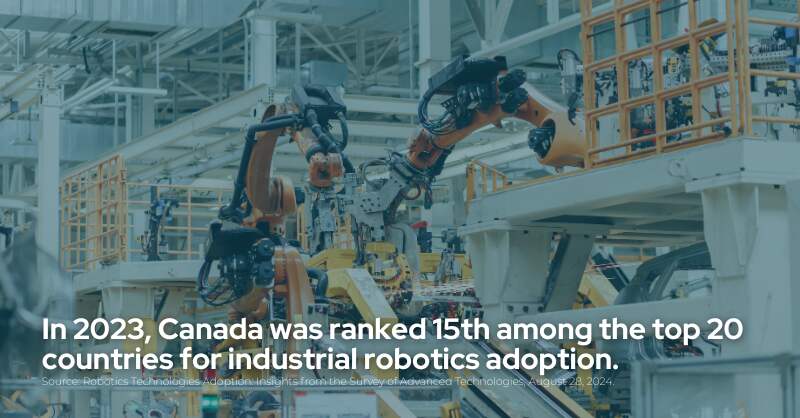
Canada has earned global recognition for pioneering artificial intelligence research. We are home to leading thinkers in deep learning, with strong AI hubs in Toronto, Montreal, Edmonton, and Vancouver—and to a government that, early on, invested in AI as a strategic priority.
Yet when it comes to robotics, especially physical AI—or general-purpose robots that combine intelligence with physical capability—Canada has not yet made the same national commitment. Traditional robotics has been around for 50 years; within that time, Canada has produced a few notable companies focused on mobility, actuators, and automation. These are strengths we should build on. But make no mistake: physical AI is something new, and its potential is only beginning to unfold.
Unlike specialized machines that weld cars or vacuum floors, physical AI involves robots with enhanced capabilities that can adapt to many different tasks in real-world environments across industries. Physical AI will become the physical workforce of the future and impact almost every labour force globally.
“On a recent visit to China, I saw firsthand how its scale dwarfs ours. Singapore, Korea, Japan, and many others are following suit. If we do not move decisively as a country, we risk pioneering a field that others capitalize on.”
Right now, Canada has virtually no infrastructure or ecosystem specifically designed for physical AI. We have scattered assets—talent, IP, data, and a handful of pioneering companies—but no unified national strategy to scale them into a globally competitive sector. Meanwhile, other countries are moving fast. On a recent visit to China, I saw firsthand how its scale dwarfs ours. Singapore, Korea, Japan, and many others are following suit. If we do not move decisively as a country, we risk pioneering a field that others capitalize on.
A Defining Technological Turning Point
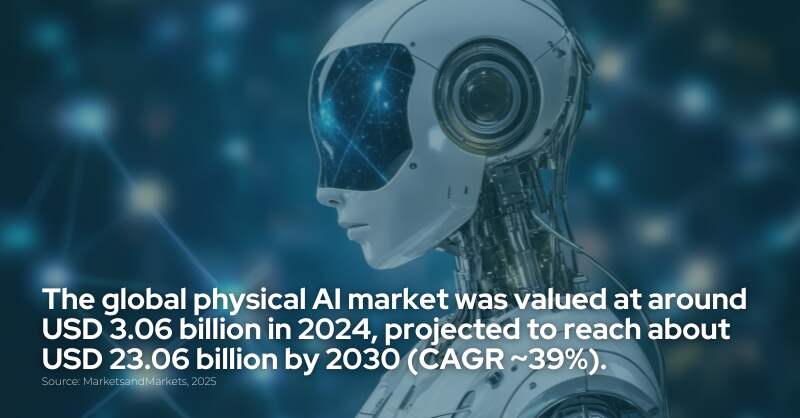
The challenge before us is twofold. First, Canada must recognize that physical AI is not simply “the next robotics wave” to be slotted into existing frameworks. Like digital AI, it is a transformative platform technology that will reshape our economy, labour force, and national resilience.
Second, we must build a strategy that coordinates both the supply and the adoption of physical AI. If all we do is export Canadian physical AI technology, we risk losing the productivity gains to other nations that this technology affords. Conversely, if we exclusively import physical AI systems, we risk surrendering our labour productivity, data, and industrial sovereignty to foreign suppliers such as China and the US.
“It is not an exaggeration to say that future national competitiveness will depend on the degree to which we invest in labour productivity through technology—and specifically, physical AI.”
As a Canadian, neither outcome is acceptable. Canada already has the assets and ingredients to lead: intellectual property, world-class technology, industry partners willing to adopt, and firms with global reputations in robotics and automation. The challenge is to align these strengths into a coordinated national strategy.
The opportunity is extraordinary. Labour drives our GDP—from manufacturing, agriculture, construction, healthcare, eldercare, and logistics, physical AI will be the labour force multiplier of the future. It is not an exaggeration to say that future national competitiveness will depend on the degree to which we invest in labour productivity through technology—and specifically, physical AI.
Building a Strategy for Global Leadership
“Incentivize adoption that creates jobs and upskilling opportunities, ensuring that robotics strengthens—not replaces—our workforce.”
Canada must resist the temptation to simply mirror what others are doing. We do not have the low-cost manufacturing power of China or the scale of the US. But we do have world-class talent, world-leading IP, and a tradition of responsible innovation. That is where we should focus our efforts.
To lead in physical AI, Canada must:
- Unite around a national strategy. Align government, industry, and academia around a common mission that amplifies our national strengths.
- Balance supply and adoption. Encourage both the creation of physical AI technologies and their integration into domestic industries—from automotive to energy to agriculture—so productivity gains stay in Canada.
- Double down on IP protection. Competing on cost is a race to the bottom. Canada’s advantage lies in safeguarding, commercializing, and scaling its intellectual assets.
- Empower Canadian workers. Incentivize adoption that creates jobs and upskilling opportunities, ensuring that robotics strengthens—not replaces—our workforce.
Why Canada Must Act Now
“It won’t be robots taking Canadian jobs—it will be foreign firms filling—and profiting from—our labour needs.”
Physical AI will soon be as ubiquitous as digital AI, seamlessly integrated into daily life. But unlike software, it will operate as a physical extension of the labour force, filling critical gaps as birth rates decline and workforce expectations shift. From hospitals to farms to factories, physical AI will be essential to Canada’s productivity and resilience.
The stakes could not be higher. If Canada fails to invest in physical AI, we are not protecting Canadian jobs—we are ceding them to foreign companies. Just as “AI doesn’t replace people, but people using AI replace people,” the same holds true here: it won’t be robots taking Canadian jobs—it will be foreign firms filling—and profiting from—our labour needs.
This is about more than jobs. The global race toward artificial general intelligence runs through physical AI, and every major tech firm is pursuing it. Whoever leads in this field will shape not only the economy of the future but the trajectory of AI itself.
Canada must make a national bet—one that supports our IP, our talent, and our values—to lead in physical AI. Our nation’s prosperity, resilience, and sovereignty depend on it.
About the Expert
-

James Wells is the CEO of Sanctuary AI, Canada’s leading company in the development of physical AI that is addressing global labour challenges. An entrepreneur and former venture capitalist, he has spent the last seven years pioneering and shaping the physical AI industry.
See more
-
 Competing in Robotics: A Canadian Strategy for Economic Sovereignty
 Daniel Araya
Senior Fellow
Centre for International Governance Innovation (CIGI)
Daniel Araya
Senior Fellow
Centre for International Governance Innovation (CIGI)
 Peter Suma
CEO
Thresh.app
Peter Suma
CEO
Thresh.app
-
 The Global Economy is Being Rewired. Canada Can’t Run Yesterday’s Playbook
 Shane Dunn
Canada EY-Parthenon Leader
EY Canada
Shane Dunn
Canada EY-Parthenon Leader
EY Canada
-
 Canada’s Semiconductor Strategy: Are We Mistaking “Not Winning Everywhere” for “Not Competing at All”?
 Glen Lougheed
CEO
Applied Post
Glen Lougheed
CEO
Applied Post