
A Future Canada Must Choose: Nation-Building Through Indigenous Power
Indigenous Nations are reshaping Canada’s “nation-building” projects-from pipelines to ports-by moving from consultation to co-ownership.

Canada is once again in a fever of “nation-building.” Pipelines, transmission corridors, mines, ports, highways, even Arctic shipping routes—these projects are being sold as the building blocks of tomorrow’s prosperity. But the big question rarely asked in Ottawa or Bay Street is the simplest one: who will benefit from this construction boom?
Indigenous peoples already know the answer. For generations, these projects were built through Indigenous lands and lives, but rarely with Indigenous consent or participation. That old model was not only unjust, it was economically self-defeating in terms of shared prosperity. Today, Indigenous Nations are not spectators. They are financiers, developers, project owners, and skilled workforces. The real test for Canada is whether federal policy will finally catch up to this reality—or whether “nation-building” will once again mean building a Canada that sidelines the very Nations whose territories make it possible.
The New Foundation of Nation-Building
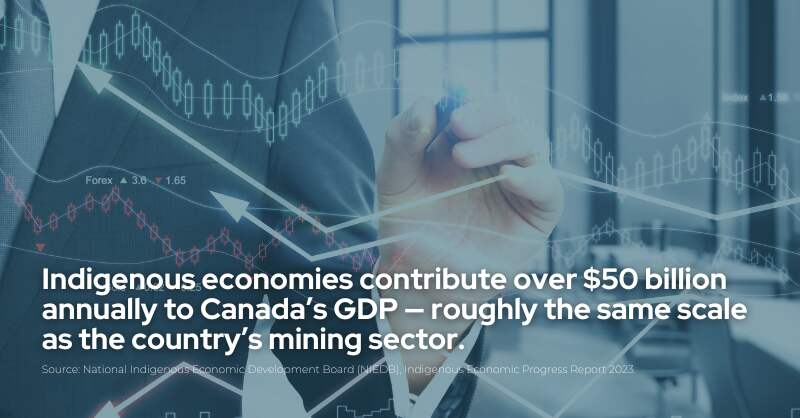
Consider what has already happened, not as a favour but as a foundation. Twenty-three First Nations and Métis communities in Alberta bought a billion-dollar stake in pipeline infrastructure. The Haisla Nation in British Columbia is the majority owner of the Cedar LNG project with equity financed through the First Nations Finance Authority.
“The reopening of the Port of Churchill under Indigenous leadership is being hailed as a model for Arctic sovereignty and prosperity. These are the projects Canada now regards as fundamental to its economic future.”
The federal government’s new Major Projects Office (MPO) confirms this shift. The MPO’s main purpose is to ensure federal reviews are timely and predictable, as well as to facilitate Crown consultation with Indigenous peoples. Its first list of nationally significant projects includes McIlvenna Bay in Saskatchewan, advanced with the Peter Ballantyne Cree Nation; the Red Chris Mine expansion in British Columbia, developed with the Tahltan Nation; and in Manitoba, the reopening of the Port of Churchill under Indigenous leadership is being hailed as a model for Arctic sovereignty and prosperity. These are the projects Canada now regards as fundamental to its economic future.
Why Ownership Matters
Ownership matters because it stabilizes projects, accelerates timelines, and shares risk and reward. It answers the question of legitimacy. When benefits stay in the community, projects move forward with fewer roadblocks and greater trust. In short, equity is efficiency.
The federal government’s inventory of major developments illustrates a clear trend. Across sectors and regions, the same pattern emerges: when Indigenous Nations hold an equity stake, projects advance with greater certainty and momentum. When those partnerships are absent, initiatives often encounter delays, legal disputes, community opposition, and heightened political risk. Equity participation is no longer a symbolic gesture—it is evolving into the most critical safeguard for project success in Canada.
In practice, Indigenous ownership aligns economic interests, strengthens social licence, and embeds projects within a foundation of shared prosperity. It is increasingly the decisive factor that determines whether large-scale ventures move forward or stall indefinitely.
The Other Half: Procurement
“Last year’s $1.6 billion figure in federal contracts sounds bold until you notice that much of it flowed to large corporations gaming the rules or to firms self-identifying as “Indigenous” without accountability.”
But ownership is only half of the economic future. The other half is procurement. At present, Indigenous businesses are trapped in a contracting system designed to keep them on the margins. Last year’s $1.6 billion figure in federal contracts sounds bold until you notice that much of it flowed to large corporations gaming the rules or to firms self-identifying as “Indigenous” without accountability. Meanwhile, genuine Indigenous entrepreneurs—builders, suppliers, innovators—remain locked out by red tape and inaccessible processes.
This is where the opportunity of the project list could be transformative. The national portfolio of major projects will require thousands of contracts. If Indigenous businesses are sidelined, billions in benefits will bypass the communities most affected. If procurement is reformed, those same projects become engines of local employment, entrepreneurship, and intergenerational wealth. That is the real multiplier effect of Indigenous participation.
Reform must mean verification, outreach, and contracts scaled for the realities of small and medium-sized and community-based businesses and Indigenous entrepreneurs. It must mean ensuring Indigenous firms actually win the work that nation-building demands. As billions in project capital flow through public and private channels, procurement reform is a necessity.
Financing the Future
“Ottawa’s recent loan guarantee announcements ring hollow unless the funds actually flow to projects, allowing these Indigenous institutions to finance the direct and indirect spin-offs.”
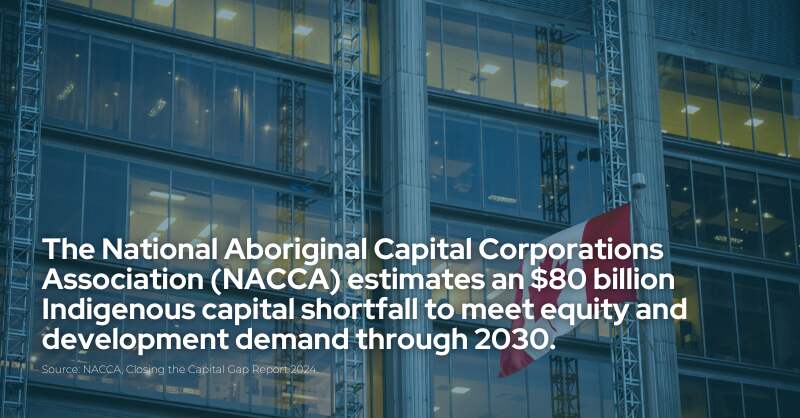
Financing is the lifeblood of economic activity. No Indigenous Nation can buy into billion-dollar projects without access to capital. Institutions like the First Nations Finance Authority, National Aboriginal Capital Corporations Associations, First Nations Bank, and Cedar Leaf Capital exist precisely to close that gap. They work because they are Indigenous-governed and understand both the corporate balance sheet and the community heartbeat.
I know, because I worked for an Indigenous Financial Institution in the early days of my career. Ottawa’s recent loan guarantee announcements ring hollow unless the funds actually flow to projects, allowing these Indigenous institutions to finance the direct and indirect spin-offs. Here again, the Major Projects Office could make the difference. If its reviews are paired with assessing Indigenous inclusion, then Canada may finally unlock full Indigenous participation. Otherwise, the project list risks becoming a catalogue of ambition, rather than a roadmap to shared prosperity.
The Policy Path Forward
The path forward is not mysterious. UNDRIP already demands it: the right of Indigenous peoples to determine their economic futures, control their lands, and consent to projects. The best way to honour that isn’t through endless studies or symbolic gestures, but through concrete policy: embed Indigenous equity in every federal infrastructure dollar; overhaul procurement to privilege verified Indigenous businesses; and strengthen Indigenous financial institutions as pillars of national economic planning.
This is not about inclusion in someone else’s economy. It is about recognizing that Indigenous economies are already here, already building, already nation-making.
A Future Built Together
“If Canada chooses this path, the payoff is immense. Capital flows more smoothly, projects gain resilience, and communities thrive as revenues circulate locally.”
If Canada chooses this path, the payoff is immense. Capital flows more smoothly, projects gain resilience, and communities thrive as revenues circulate locally. Instead of crisis-driven negotiations, partnerships are grounded in respect and shared prosperity.
This future is not only possible—it is already emerging in places where Indigenous equity has been embraced. Expanding it nationwide would mean a Canada whose growth is measured not just in GDP, but in trust, durability, and the strength of its relationships.
Nation-building without Indigenous power is simply another colonial project. Nation-building with Indigenous peoples can be the firepower we need to move our economy forward.
About the Expert
-

Michael Fox is from Weenusk First Nation and is the President and CEO of Indigenous & Community Engagement (ICE) – one of Canada’s leading national Indigenous firms specializing in community consultation, facilitation, negotiations, capacity building, & Indigenous social research. He brings a wealth of experience in structuring projects and financing for both industry and Indigenous clients. He obtained an honours degree in Political Science with a focus on Aboriginal Law & Resource Development and has an MBA with a specialization in Social Enterprise. He is a Certified Business Consultant, a Certified Professional Facilitator, a certified Change Management Practitioner, and a certified Professional Aboriginal Economic Developer. Michael helps with reconciliation action plans, Indigenous participation plans, and Indigenous inclusion initiatives. He believes in higher education and has taught university courses to share his professional experiences with the next generation of Indigenous business leaders.
See more
-
 Consent, Not Checkboxes: Energy Projects and Indigenous Rights in Canada
 John Cook
Senior VP & Portfolio Manager
Mackenzie Investments
John Cook
Senior VP & Portfolio Manager
Mackenzie Investments
 Raylene Whitford
Director
Canative Energy
Raylene Whitford
Director
Canative Energy
-
 Indigenous Youth Are Key Partners in Strengthening Canada’s Security
 Jennifer Brennan
Senior Director
Mastercard Foundation
Jennifer Brennan
Senior Director
Mastercard Foundation
-
 Indigenous Wealth Creation from Seed to Success
 Michele Young-Crook
Co-Founder
Rezolution Summit
Michele Young-Crook
Co-Founder
Rezolution Summit
 Janice L. Gladue
Co-Founder
Rezolution Summit
Janice L. Gladue
Co-Founder
Rezolution Summit